 Domain SearchSecure your perfect UAE domain in seconds.
 Domain TransferSeamless domain transfer. Zero downtime, complete control.
 All TLDsSecure your ideal domain. Explore local UAE and international extensions.
 WHOIS LOOKUPCheck domain ownership, expiry dates, and registrar details instantly.
 AE DomainRegister a .AE domain and build trust in the UAE.
 SSL CertificatesProtect your site with trusted SSL Certificates to secure data and build customer confidence.
 .com DomainGet the world’s most trusted domain and build credibility from day one.
 Web hostingFind budget-friendly hosting that doesn’t compromise on performance.
 Windows HostingHigh-performance hosting for Windows applications and websites.
 Affiliate ProgramBecome a partner and earn commission for every referral.
 WordPress HostingBlazing-Fast WordPress Hosting, Optimised for Performance.
 Email HostingSecure your communications with professional email hosting. Use your domain, stay in control.
 Reseller HostingLaunch your own hosting brand. We handle the tech, you grow your business.
 cPanel HostingHosting supported by cPanel (simple and user-friendly)
 VPS HostingVirtual servers that grow with you. Full root access. Blazing fast performance.
 Managed VPS HostingNot a tech expert? Let us handle everything with our fully managed VPS hosting.
 Dedicated ServersEnjoy full access and total control over your dedicated physical server.
 AI Website BuilderBuild beautiful websites instantly with AI.
 Online ShopCreate a professional online store. No coding needed.
 Web Design ServicesGet a custom website built for your brand and your goals.
 BlogDiscover resources on web hosting, e-commerce, digital marketing, and beyond.
 Contact UsWe are available 24/7 via chat or email
 SupportExplore guides and answers for all our services
AI expansion in the UAE isn’t just another tech trend. It’s a complete infrastructure revolution that’s changing everything.
The numbers tell a story that’s hard to ignore. UAE’s data center market is projected to hit $3.3 billion by 2030. That’s triple its 2024 valuation of $1.26 billion. This isn’t gradual growth. This is explosive demand driven by one force: artificial intelligence.
Here’s what’s happening on the ground. Every major tech player is racing to establish presence in the Emirates. Microsoft, AWS, Google Cloud, and Oracle are all building facilities here.
Local giants like G42 and du are investing billions. The government is mandating sovereign cloud infrastructure for critical operations.
And if you’re running a business in the UAE? You need to understand what this means for your infrastructure decisions.
The Reason Behind UAE’s AI Expansion
Let me paint you a picture of how fast things are moving.
Abu Dhabi just announced a AED 13 billion Digital Strategy for 2025-2027. The mandate is clear. Migrate 100% of mission-critical workloads to sovereign clouds. Dubai isn’t far behind with its Smart City initiatives. They’re requiring cloud-native architectures across government services.
The AI expansion is creating physical infrastructure at breakneck speed. The UAE currently operates 34 data centers. Another 23 are under construction. Total capacity? Over 350 megawatts operational. Another 500 megawatts are being developed right now.
Consider what that means. A single AI training cluster can consume as much power as a small town. The UAE AI Strategy 2031 positions the country as a global leader. It’s backing these ambitious goals with serious capital.
Major Players Making Big Bets
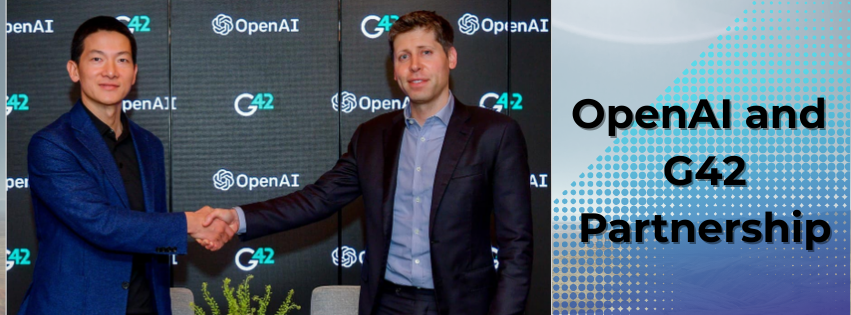
G42 partnered with OpenAI on the Stargate project. du committed AED 2 billion for hyperscale partnerships. Khazna Data Centres is building a 100-megawatt AI facility in Ajman. It’s specifically for machine learning workloads.
These aren’t speculative investments. These are responses to real, immediate demand. Enterprises are deploying AI systems today.
Financial services need fraud detection running in real-time. Healthcare providers are implementing diagnostic AI tools.
Retailers want recommendation engines that respond in milliseconds. Government agencies are automating citizen services with natural language processing.
Every single one of these applications requires massive compute power. They need data storage too. And increasingly, they require it locally.
Why Local Cloud Hosting Matters for AI Expansion
You might wonder why companies can’t just use overseas hosting. After all, cloud is cloud, right?
Wrong. Dead wrong, actually.
Data Sovereignty Changes Everything
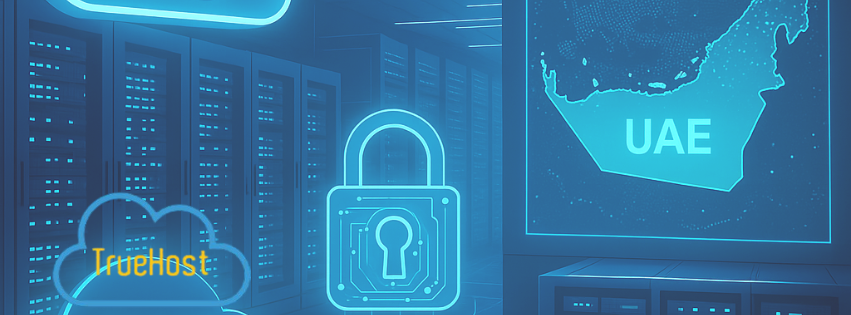
Federal Decree Law No. 45 of 2021 on Personal Data Protection is clear. Personal data collected in the UAE has restrictions on cross-border transfers. You need explicit exemptions to move certain data outside UAE borders.
Health data? Must stay in the UAE under Federal Law No. 2 of 2019. Financial sector information faces similar requirements from regulatory bodies. DIFC and ADGM free zones have their own frameworks. They have specific compliance mandates.
This isn’t bureaucratic red tape. This is legal reality. It affects where you can physically store and process data. AI systems trained on customer data need compliant infrastructure. Same goes for medical records or financial transactions.
Performance Isn’t Negotiable for AI
Here’s something most people don’t realize about AI applications. Latency kills user experience faster than anything else.
A chatbot that takes three seconds to respond? Users abandon it. A recommendation engine that lags? You lose the sale. Fraud detection that’s delayed by 200 milliseconds? The transaction already went through.
Local hosting in the UAE delivers sub-20ms latency for regional users. Compare that to 100ms or more when hosting overseas. That difference matters enormously for real-time AI applications.
First Abu Dhabi Bank reported something interesting. Over 90% of digital interactions now run on cloud clusters. They needed that local infrastructure to handle peak loads.
They couldn’t afford degraded customer experience. The banking sector’s digital transformation relies heavily on these performance advantages.
Think about it differently. Every millisecond of latency costs money. Page load time affects conversion rates directly. Search engines factor site speed into rankings. For AI-powered applications serving UAE customers, local hosting isn’t optional.
AI Infrastructure Has Unique Needs
Running AI workloads isn’t like hosting a website. It’s nothing like an email server either.
Machine learning requires GPU-enabled clusters. Training models needs massive parallel processing capability. Inference servers demand high-throughput, low-latency data pipelines. Storage requirements can reach petabyte scale.
Power consumption alone sets AI infrastructure apart. A typical data center might use 5-10 megawatts. An AI facility? Try 50-100 megawatts. That’s why you’re seeing specialized AI data centers being built. They’re not just retrofitting existing facilities.
The UAE’s AI expansion is driving purpose-built infrastructure. Cooling systems designed for GPU heat loads. Power grids with redundancy for continuous training runs. Network architectures optimized for the data movement patterns of machine learning.
Which Industries Are Driving This Growth?
AI expansion isn’t happening uniformly. Certain sectors are leading the charge.

1) Banking Moves Fast on AI
Financial services were early adopters. They’re accelerating now. Real-time payments require elastic compute capacity. It needs to scale instantly. Open banking APIs need infrastructure that handles traffic spikes without breaking.
AI-powered fraud detection scans millions of transactions per second. That processing happens locally. Milliseconds matter. Data sovereignty requirements are strict too.
Credit scoring models, risk assessment algorithms, customer service chatbots. All running on local cloud infrastructure.
The regulatory environment reinforces this. UAE banks must demonstrate where customer data resides. They must show how it’s protected. Local hosting simplifies compliance enormously.
2) Healthcare Gets Serious About AI
Medical AI is exploding. Diagnostic tools analyzing X-rays and MRIs. Telemedicine platforms connecting patients with doctors. Electronic health records systems serving entire hospital networks.
Patient data sovereignty isn’t optional here. It’s mandated by law. Every piece of health information must stay within UAE jurisdiction. AI systems processing this data need infrastructure that guarantees compliance.
The performance requirements are stringent too. Medical imaging AI needs to process scans quickly. It has to be useful in clinical settings. Telemedicine can’t tolerate laggy video. Delayed prescriptions aren’t acceptable either.
3) E-Commerce Depends on AI
Online retail in the UAE is heavily AI-driven. Personalization engines recommend products based on browsing behavior. Inventory systems predict demand using machine learning. Dynamic pricing algorithms adjust in real-time. They respond to competition and demand.
These systems process enormous amounts of customer data. Purchase history, browsing patterns, demographic information. All subject to data protection laws. Local hosting ensures compliance. It delivers the low latency needed for smooth shopping experiences.
Payment processing adds another layer. E-commerce platforms handling transactions need PCI-DSS compliance. They need to meet UAE data regulations too. Local cloud providers specializing in secure infrastructure make this manageable.
4) Government Leads by Example
UAE government entities are deploying AI at scale. Traffic optimization in Dubai uses computer vision. It uses predictive analytics too.
Court systems are automating transcription with natural language processing. Citizen service portals employ chatbots for common inquiries.
The mandate for sovereign cloud adoption comes from the top. Abu Dhabi’s digital strategy explicitly requires government workloads on local infrastructure.
This is both security policy and economic strategy. It’s building the knowledge economy from the ground up.
What You Gain with Local UAE Hosting
The benefits stack up quickly. You just need to start examining them.
I) Compliance
Data residency is guaranteed when servers physically sit in UAE facilities. Audit trails are straightforward. When regulators ask where data is stored, you point to specific locations. They’re all within the country.
This matters enormously for legal liability. Cross-border data flows carry complex legal requirements. Keep everything local and you avoid most of these complications. Your legal team will thank you.
PDPL compliance? Easier when data never leaves the jurisdiction. Health data regulations? Covered by default. Financial sector requirements? Built into the infrastructure.
II) Performance
I mentioned latency earlier. It’s worth expanding on. Users in the UAE accessing locally-hosted applications see page loads 5-10 times faster. That’s compared to overseas hosting which is not a minor improvement. It’s the difference between users staying or bouncing.
SEO rankings factor in site speed. Google prioritizes fast-loading pages. Hosting closer to your audience directly improves search visibility. For businesses depending on organic traffic, this creates measurable competitive advantage.
Bandwidth costs drop too. International data transfer fees add up quickly at scale. Local hosting means data moves within the region. It costs much less.
III) Support
Time zones matter more than people think. When systems go down at 2 AM Dubai time, what do you want? Support on the other side of the world just starting their day? Or engineers in the same time zone who can respond immediately?
Local providers understand UAE regulatory landscape. They know PDPL requirements. They’re familiar with sector-specific compliance needs. That expertise saves time. It reduces risk too.
Arabic language support is available from regional providers. Documentation, support tickets, phone calls. All in the language your team prefers.
Truehost Cloud provides 24/7 support. Our able engineers understand both the technical and regulatory environment. They know what your business operates in.
The Challenges You Should Know About
AI expansion in the UAE isn’t without obstacles. Let’s be honest about them.
Power and Cooling Are Serious Issues
The UAE climate makes cooling data centers expensive. Summer temperatures exceed 45°C regularly. Cooling systems must work overtime. They consume significant power.
Electricity for AI data centers is substantial. GPU clusters generate enormous heat. A rack of AI servers might need 30-40 kilowatts. That’s for power and cooling. Traditional data centers handle 5-10 kilowatts per rack.
Grid capacity constraints exist in certain areas. Industrial zones have limits on power allocation. This is why you see major facilities clustering in specific locations. They need adequate electrical infrastructure.
The shift toward renewable energy helps. Projects like Al Dhafra Solar Farm are designed partly to support data center growth. They’re doing it sustainably.
Talent Shortages
Finding skilled AI and cloud engineers in the UAE is competitive. Everyone’s hiring for the same specialized roles. Salaries are climbing. Demand outpaces supply.
Managed services become attractive here. Rather than building full in-house teams, businesses partner with providers. They already have the expertise. It’s faster to deploy. It’s often more cost-effective too.
Training programs are expanding. Universities and technical colleges are adding cloud and AI curricula. But there’s a lag. It takes time between training new talent and filling current needs.
Cost Considerations
Local infrastructure requires investment. Power, real estate, equipment. All have price tags. Initial costs for sovereign cloud can exceed international alternatives.
However, total cost of ownership tells a different story. Factor in compliance risk reduction. Consider performance benefits. Think about improved customer experience. Local hosting often wins financially.
UAE electricity rates are globally competitive. They’re at $0.05-0.06 per kilowatt-hour. Data center operators benefit from bulk power agreements. This helps offset other infrastructure costs.
Hybrid Strategies
Few businesses operate entirely on local infrastructure. Most adopt hybrid approaches. They mix local and global resources.
Mission-critical data and AI workloads run locally. That’s for compliance and performance. Less sensitive applications might use international cloud providers for scale. This balances cost, capability, and compliance.
Avoiding vendor lock-in requires planning. Multi-cloud strategies distribute risk. They add complexity though. Workload portability becomes important. It matters for long-term flexibility.
How to Choose the Right Provider
Let me walk you through what actually matters. These are the things to consider when evaluating options.
A) Start with Compliance Verification
Ask providers directly. Where is data physically stored? What certifications do they hold? UAE Data Office approval matters. ISO 27001 shows security maturity. PCI-DSS is necessary if you handle payments.
Request documentation. Don’t accept vague assurances. You need specific answers about data residency. You need to know about backup locations. Disaster recovery sites matter too.
B) Evaluate Infrastructure Quality
Tier III or higher data centers provide the redundancy AI workloads need. Look for N+1 redundancy at minimum. Power, cooling, network connectivity. All should have backup systems.
Uptime SLAs should exceed 99.95%. Anything less creates too much risk. Production AI systems can’t tolerate downtime. Review the SLA terms carefully. What compensation do you receive for downtime?
C) Assess AI-Specific Capabilities
Not all cloud hosting supports AI workloads equally. GPU availability matters if you’re training models. Container orchestration with Kubernetes is standard now. It’s for deploying AI applications. Serverless options work well for inference services. They handle variable load.
Scalability shouldn’t be an afterthought. Can the infrastructure handle 10x growth? What about 100x? AI expansion might accelerate faster than you plan. You need a provider who can scale with you.
Truehost Cloud offers GPU-enabled instances. They have Kubernetes clusters. Auto-scaling infrastructure is specifically designed for AI workloads. UAE data residency guarantees are included.
Security Features
DDoS protection is table stakes. AI services become targets once they’re valuable. Multi-layered firewalls, intrusion detection, continuous monitoring. These should be included. They shouldn’t be add-ons.
Encryption at rest and in transit protects sensitive training data. It protects model parameters. Two-factor authentication for administrative access. Regular security audits and penetration testing.
Ask about their incident response process. How quickly do they detect security events? How do they respond? What communication protocols exist for notifying customers?
Important Questions
Here’s what you should ask potential providers:
| Question | Why It Matters |
|---|---|
| Where exactly is my data stored? | Compliance verification |
| What compliance certifications do you maintain? | Regulatory requirements |
| What’s your average latency for UAE users? | Performance validation |
| Do you offer GPU instances for ML workloads? | AI capability assessment |
| What backup and DR options are available? | Business continuity |
| Can you assist with migration from existing hosting? | Implementation planning |
| What are your data sovereignty guarantees? | Legal protection |
Making Your Move
AI expansion in the UAE creates both opportunity and necessity.
Opportunity because early adopters gain competitive advantages. Better customer experiences. Faster operations. Data-driven decision making. These benefits compound over time.
Necessity because regulatory requirements are rising. Customer expectations are rising too. Data sovereignty isn’t optional anymore. Performance standards keep increasing. Security threats evolve constantly.
The question isn’t whether to move to UAE-compliant cloud hosting. The question is different. How quickly can you make that transition? How do you minimize disruption to operations?
Start with assessment. What workloads do you have? Which require local hosting for compliance? Which would benefit most from performance improvements? Map your applications to requirements.
Then plan migration carefully. Data transfer timelines matter. Testing protocols ensure nothing breaks. Staff training prepares your team. Budget realistically for both migration and ongoing operations.
Your infrastructure decisions today shape your competitive position tomorrow.