 Domain SearchSecure your perfect UAE domain in seconds.
 Domain TransferSeamless domain transfer. Zero downtime, complete control.
 All TLDsSecure your ideal domain. Explore local UAE and international extensions.
 WHOIS LOOKUPCheck domain ownership, expiry dates, and registrar details instantly.
 AE DomainRegister a .AE domain and build trust in the UAE.
 SSL CertificatesProtect your site with trusted SSL Certificates to secure data and build customer confidence.
 .com DomainGet the world’s most trusted domain and build credibility from day one.
 Web hostingFind budget-friendly hosting that doesn’t compromise on performance.
 Windows HostingHigh-performance hosting for Windows applications and websites.
 Affiliate ProgramBecome a partner and earn commission for every referral.
 WordPress HostingBlazing-Fast WordPress Hosting, Optimised for Performance.
 Email HostingSecure your communications with professional email hosting. Use your domain, stay in control.
 Reseller HostingLaunch your own hosting brand. We handle the tech, you grow your business.
 cPanel HostingHosting supported by cPanel (simple and user-friendly)
 VPS HostingVirtual servers that grow with you. Full root access. Blazing fast performance.
 Managed VPS HostingNot a tech expert? Let us handle everything with our fully managed VPS hosting.
 Dedicated ServersEnjoy full access and total control over your dedicated physical server.
 AI Website BuilderBuild beautiful websites instantly with AI.
 Online ShopCreate a professional online store. No coding needed.
 Web Design ServicesGet a custom website built for your brand and your goals.
 BlogDiscover resources on web hosting, e-commerce, digital marketing, and beyond.
 Contact UsWe are available 24/7 via chat or email
 SupportExplore guides and answers for all our services
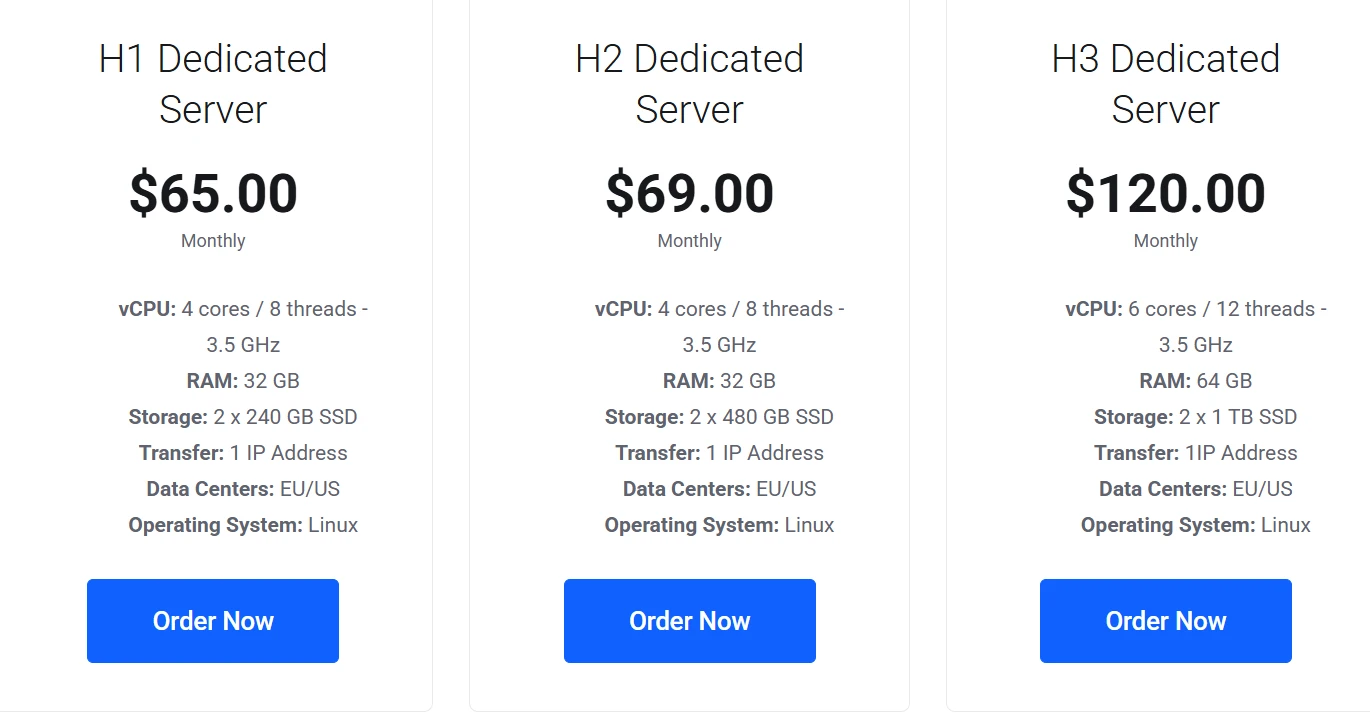
A dedicated server in the UAE starts at around AED 300 per month. That is less than many teams spend on SaaS tools.
The real challenge is not the price. It is knowing what you are actually paying for.
Pick the wrong plan, and you will overpay every month. Pick the wrong provider, and you will lose sleep over downtime.
This guide walks you through both decisions, step by step.
By the end, you will know how to compare providers, size your server correctly, and go live without costly surprises.

What a Dedicated Server Actually Costs in the UAE
Pricing in the UAE market varies more than most buyers expect. Hardware specs, management level, and data center location all push the number up or down.
Here is a clear breakdown to set the right expectations before you start shopping.
| Tier | Monthly Price (AED) | Typical CPU | RAM | Storage | Best For |
|---|---|---|---|---|---|
| Entry | AED 300 – 600 | Intel Xeon E3 / AMD Ryzen | 8 – 16 GB DDR4 | 500 GB SSD | Small websites, dev environments |
| Mid-Range | AED 600 – 1,200 | Intel Xeon E5 / AMD EPYC | 32 – 64 GB DDR4/5 | 1 TB NVMe | E-commerce, SaaS apps, CRMs |
| Enterprise | AED 1,200 – 2,000+ | Dual Intel / AMD EPYC 9xxx | 128 – 192 GB DDR5 | 2x 1 TB NVMe | Fintech, government, high-traffic apps |
Several factors push the price beyond the base configuration:
- Storage type matters more than raw capacity. NVMe drives are 5 to 10 times faster than SATA SSDs. Going NVMe on a mid-range plan adds AED 100 to 200 monthly.
- RAM generation affects both price and speed. DDR5 memory costs more than DDR4, but sustains better throughput under heavy database loads.
- Managed services add 25-50% to the base cost. You are paying for patching, monitoring, and incident response.
- Port speed upgrades are a common hidden cost. Upgrading from 1 Gbps to 10 Gbps can add AED 200 to 400 per month.
- Windows Server licensing is not free. Budget an extra AED 150 to 300 monthly if your stack depends on Windows.
- Control panel licenses like cPanel cost AED 100 to 180 monthly. Some providers bundle them, but many do not.
- IP address add-ons are often overlooked. Most providers include 1 to 5 free IPs. Additional IPs cost AED 10 to 30 each.
Managed vs. Unmanaged Dedicated Server in the UAE: Which One Fits You?
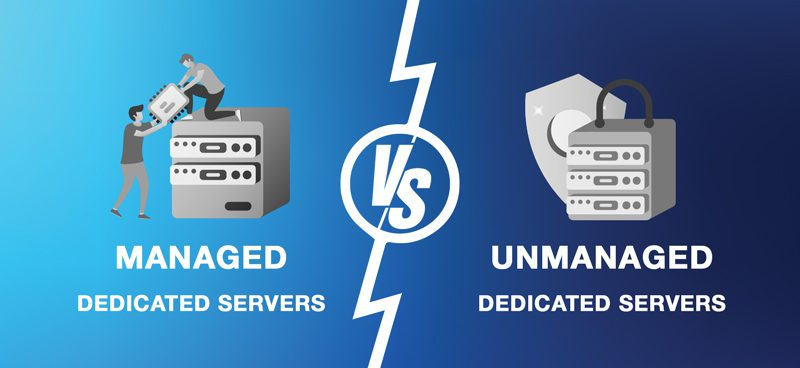
This is the decision most buyers get wrong. They go unmanaged to save money, then spend hours on server tasks they did not plan for. Here is what each option actually involves.
Managed Hosting
A managed plan means the provider handles the server’s day-to-day health.
You focus on your product, and they handle the infrastructure layer.
- OS updates and security patches are applied by the provider on a scheduled basis.
- Server monitoring runs continuously, and the provider responds to hardware or network alerts before you even notice them.
- Incident response is included. If your server goes down at 3 AM, their team handles it, not yours.
- Some providers also include firewall management and basic backup configuration under the managed tier.
Managed plans are the right call for agencies, startups without a sysadmin, and any team running production apps without a dedicated IT person on staff.
Unmanaged Hosting
Unmanaged bare metal gives you full root access and full responsibility.
The provider maintains the physical hardware and network. Everything above the OS layer is on you.
- You configure firewall rules, apply kernel updates, and manage software stack upgrades yourself.
- Security hardening is your responsibility. No one will patch your Apache install for you.
- When something breaks at the application level, you or your team diagnose and fix it.
- Unmanaged plans start below AED 350 per month. The savings are real, but so is the workload.
Unmanaged hosting makes sense for DevOps teams, experienced sysadmins, and companies with in-house infrastructure expertise.
If no one on your team has run a Linux server before, start with managed.
How to Provision a Cheap Dedicated Server in the UAE (Step-by-Step)
Choosing a plan is only half the job. Getting the server live, secured, and performing correctly is the other half.
Follow these five steps in order, and you will avoid the most common provisioning mistakes.
Step 1: Define Your Workload Requirements
Sizing a server wrong from the start costs money in one of two ways.
You either overprovision and pay for resources you never use. Or you underprovision and hit performance walls three months in.
- Use this rough sizing formula: multiply your expected concurrent users by the RAM each session needs, then add a 30% growth buffer for the next 12 months.
- For most small-to-mid web apps, a 4-core CPU, 16 GB RAM, and 500 GB NVMe is a solid starting configuration. It handles up to 500 concurrent users comfortably.
- For database-heavy apps, ERP systems, or media platforms, start at 32 GB RAM minimum. Database engines like MySQL and PostgreSQL are memory-hungry under real load.
Step 2: Choose Your OS and Control Panel
The OS choice affects cost, compatibility, and long-term maintenance workload.
The control panel choice affects how easily your team manages the server day-to-day.
Ubuntu LTS and Debian are the most popular Linux options for UAE web hosting. Both are free, well-documented, and have strong community support.
CentOS has largely been replaced by AlmaLinux or Rocky Linux as the enterprise-grade RHEL-compatible options. Both are free and widely supported by UAE providers.
Windows Server is the right call only if your application stack depends on .NET, MSSQL, or ASP.NET. Budget an extra AED 150 to 300 monthly for the license.
cPanel/WHM is the standard for hosting resellers and agencies managing multiple client sites. It costs AED 100 to 180 monthly but saves hours of manual server management.
For teams comfortable with the command line, no control panel is a valid choice. It reduces the attack surface and eliminates the license cost.
Step 3: Configure Networking and IPs
Your IP address configuration affects more than just network routing.
It has a direct impact on your SEO performance, geo-filtering behavior, and email deliverability.
UAE-based IP addresses improve geo-targeting for Arabic-language sites and reduce geo-blocking issues when serving MENA-region audiences.
Most providers include 1 to 5 IP addresses at no charge. If you need additional ranges for hosting multiple SSL certificates or running separate services, budget AED 10 to 30 per IP monthly.
Set up rDNS (reverse DNS) for your primary IP immediately. Email servers that lack rDNS are frequently flagged as spam sources, even on fresh servers.
Step 4: Set Up Security Before Going Live
A freshly provisioned server is a target the moment it gets a public IP. Do not route production traffic to it until you have completed this checklist.
- Configure a hardware firewall at the network level. Most UAE providers include this. Confirm it is active and request the default ruleset in writing.
- Enable SSH key-based authentication and disable password-based SSH login. This single step eliminates the majority of automated brute-force attacks.
- Disable root login over SSH. Create a separate admin user with sudo privileges instead.
- Install and configure fail2ban. It monitors login attempts and automatically bans IPs that exceed a set failure threshold.
- Enable RAID 1 or RAID 10 on your disk array before going live. RAID 1 mirrors data across two drives, protecting against single drive failure.
- Confirm DDoS mitigation is active at the network level. UAE providers include this by default, but application-layer protection remains your responsibility.
Run a full security checklist before accepting your first user request.
A server that goes live unsecured can take weeks to fully clean up after a breach.
Step 5: Test Latency and Run a Burn-In Check
Testing before going live is not optional. It is the step that separates servers that perform reliably from servers that surprise you on a busy Friday afternoon.
- Run a basic ping test from Dubai, Abu Dhabi, and Riyadh to confirm regional latency targets. Aim for under 15ms intra-UAE and under 30ms to Riyadh and Doha.
- Use iPerf3 to benchmark actual bandwidth throughput between your server and a client machine. Advertised port speeds and real-world throughput are not always the same number.
- Run a 24-hour synthetic load test before routing production traffic. Tools like Locust or k6 simulate concurrent user load and reveal bottlenecks before real users find them.
- Use MTR (My Traceroute) to analyze routing paths and identify network hops that add latency between your server and key markets.
- Nload gives you real-time network traffic monitoring in the terminal. Use it during your burn-in test to watch inbound and outbound traffic simultaneously.
5 Mistakes to Avoid When Buying a Cheap Dedicated Server in the UAE

Most of the frustration buyers experience with dedicated servers comes down to five predictable mistakes. Each one is avoidable if you know how to watch for it.
Mistake 1: Choosing a Provider Without a Published SLA
An uptime claim without a Service Level Agreement is just marketing copy.
Always get the uptime guarantee in writing, including the compensation terms for downtime incidents.
If a provider cannot or will not provide a formal SLA, move on.
Mistake 2: Going Unmanaged Without a Sysadmin
This is the most common source of preventable security incidents among small businesses.
Unmanaged hosting is significantly cheaper, but the savings evaporate quickly when a breach or outage requires emergency support at consulting rates.
If no one on your team manages Linux servers professionally, choose a managed plan.
Mistake 3: Ignoring Data Center Tier Ratings
Tier II and Tier III data centers look identical on a sales page. In practice, they differ significantly on redundancy.
A Tier II facility can go offline during planned maintenance.
TiA er III facility cannot. For production workloads, Tier III is the minimum acceptable standard.
Mistake 4: Underestimating Bandwidth Needs
Video streaming, large file downloads, and backup jobs can exhaust a metered 1 Gbps port faster than most buyers expect.
Always calculate your estimated monthly data transfer before choosing a plan.
Unmetered bandwidth plans cost more upfront but prevent surprise overage charges at month-end.
Mistake 5: Skipping Compliance Verification
For BFSI, healthcare, or government clients, hosting on a non-compliant server can trigger regulatory fines that dwarf the cost of the hosting itself.
Before you sign a contract, confirm the provider’s data center certifications, ask for their PDPL compliance documentation, and get their data residency guarantee in writing.
Conclusion
Knowing what management style best suits your IT team makes the process of selecting a dedicated server a whole lot easier.
To further narrow down the options, you should consider the hardware specs that fit your current and future hosting needs.
This leaves you with a short list of server providers that you can then shop around with, depending on your budget.
Truehost dedicated servers come with state-of-the-art hardware specs backed by reliable uptime. This makes them the best choice for any UAE business looking to upgrade its hosting solution.