 Domain SearchSecure your perfect UAE domain in seconds.
 Domain TransferSeamless domain transfer. Zero downtime, complete control.
 All TLDsSecure your ideal domain. Explore local UAE and international extensions.
 WHOIS LOOKUPCheck domain ownership, expiry dates, and registrar details instantly.
 AE DomainRegister a .AE domain and build trust in the UAE.
 SSL CertificatesProtect your site with trusted SSL Certificates to secure data and build customer confidence.
 .com DomainGet the world’s most trusted domain and build credibility from day one.
 Web hostingFind budget-friendly hosting that doesn’t compromise on performance.
 Windows HostingHigh-performance hosting for Windows applications and websites.
 Affiliate ProgramBecome a partner and earn commission for every referral.
 WordPress HostingBlazing-Fast WordPress Hosting, Optimised for Performance.
 Email HostingSecure your communications with professional email hosting. Use your domain, stay in control.
 Reseller HostingLaunch your own hosting brand. We handle the tech, you grow your business.
 cPanel HostingHosting supported by cPanel (simple and user-friendly)
 VPS HostingVirtual servers that grow with you. Full root access. Blazing fast performance.
 Managed VPS HostingNot a tech expert? Let us handle everything with our fully managed VPS hosting.
 Dedicated ServersEnjoy full access and total control over your dedicated physical server.
 AI Website BuilderBuild beautiful websites instantly with AI.
 Online ShopCreate a professional online store. No coding needed.
 Web Design ServicesGet a custom website built for your brand and your goals.
 BlogDiscover resources on web hosting, e-commerce, digital marketing, and beyond.
 Contact UsWe are available 24/7 via chat or email
 SupportExplore guides and answers for all our services
You are finally ready to launch your website, and after a quick search, you realize you need to learn everything related to web hosting in UAE.
Now comes the big challenge: where do you start? Can you even register a .ae website to begin with?
In a country with 100% internet penetration rate and where more than 70% of all sales journeys start online, it makes perfect sense to launch a website in the UAE.
Unfortunately, most business owners spend more time focused on the logo font only to pick the cheapest hosting service and hope for the best.
This guide covers everything you need to know to host a website in the UAE.
What is Web Hosting?
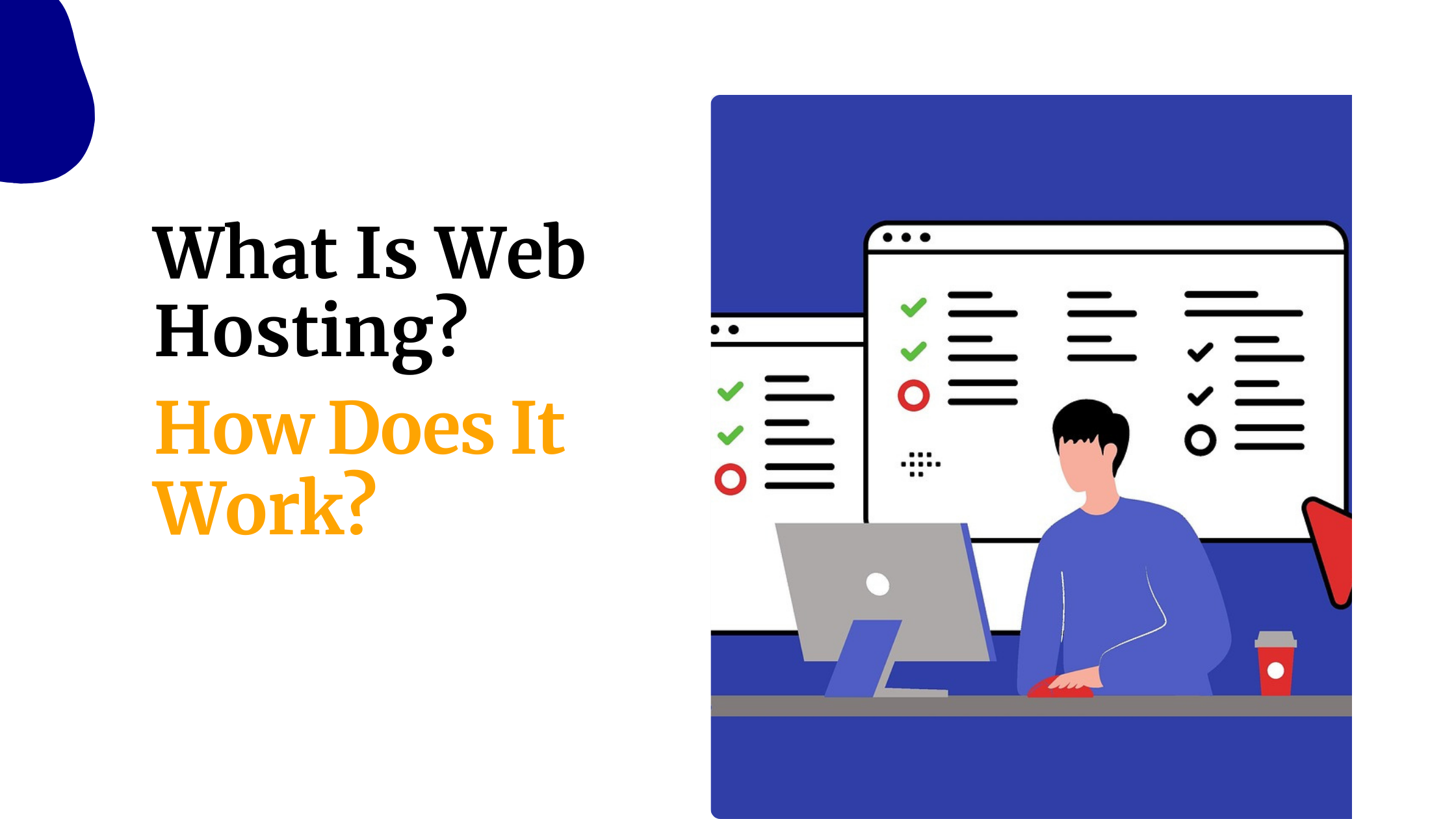
Every website is made of files: pages, images, videos, code, and databases. Those files need to live on a computer that stays connected to the internet around the clock.
Web hosting is renting space on a computer, called a server. When someone types your web address into a browser, their computer reaches out to your server, pulls your files, and displays your site.
The complexity comes from choosing the right type of server, in the right location, with the right features, at a price that makes sense for your situation.
Terms Worth Knowing
1) Bandwidth
Bandwidth is the volume of data transferred between your visitors and your website’s server. A text-heavy blog uses very little bandwidth, while a video-heavy website uses a lot.
2) Uptime
Uptime is the percentage of time your website is actually accessible to visitors. 99.9% uptime sounds good until you realize that it still allows around 8.7 hours of downtime per year.
3) SSL Certificate
A Secure Sockets Layer (SSL) certificate is the technology behind the padlock symbol in your browser and the HTTPS prefix in your URL. It encrypts data between your site and visitors. Google penalizes sites without it, and UAE regulations effectively require it for any site collecting user data.
4) cPanel
cPanel software is a web-based control panel that lets you manage your hosting account, create email addresses, install software, and handle databases without writing any code.
5) SSD Storage
Solid State Disk is the preferred storage solution as it loads data significantly faster than older hard-disk drives. Most quality hosts now offer SSD storage as standard.
6) Content Delivery Network (CDN)
CDN is a network of servers spread across different cities worldwide that stores copies of your static content. Visitors get served files from the nearest server, which cuts loading times.
Types of Web Hosting
Hosting type is the single biggest decision you will make. It affects speed, security, cost, and how far you can grow without switching providers. They include:
1) Shared Hosting

In shared hosting, your website shares a server with dozens or hundreds of other websites. Resources like CPU, RAM, and storage are divided among everyone on that server.
2) Virtual Private Server (VPS) Hosting
VPS hosting gives you a dedicated portion of a server’s resources. You still share the physical server hardware with other users, but your slice of resources is guaranteed and protected from what others are doing.

VPS hosting is the right call for growing businesses. You get stronger performance and more control than shared hosting without the cost of a full dedicated server.
3) Dedicated Hosting
For dedicated hosting, you rent an entire physical server. No sharing at all. Every resource is yours. Maximum performance, maximum control, and the highest price point.
Dedicated hosting suits high-traffic websites, large e-commerce platforms, businesses handling sensitive data, and enterprises with strict security requirements.
4) Cloud Hosting
Cloud hosting solutions involve running your website across a network of virtual servers rather than a single one. If one server goes down, another picks up automatically.
Cloud hosting fits businesses with variable traffic, startups expecting rapid growth, and applications that cannot afford downtime.
5) WordPress Hosting

Hosting plans that come with WordPress pre-configured are ideal for users looking for a simple-to-maintain setup.
They offer automatic updates, performance tuning, and staging environments tuned specifically to the WordPress platform.
6) Reseller Hosting
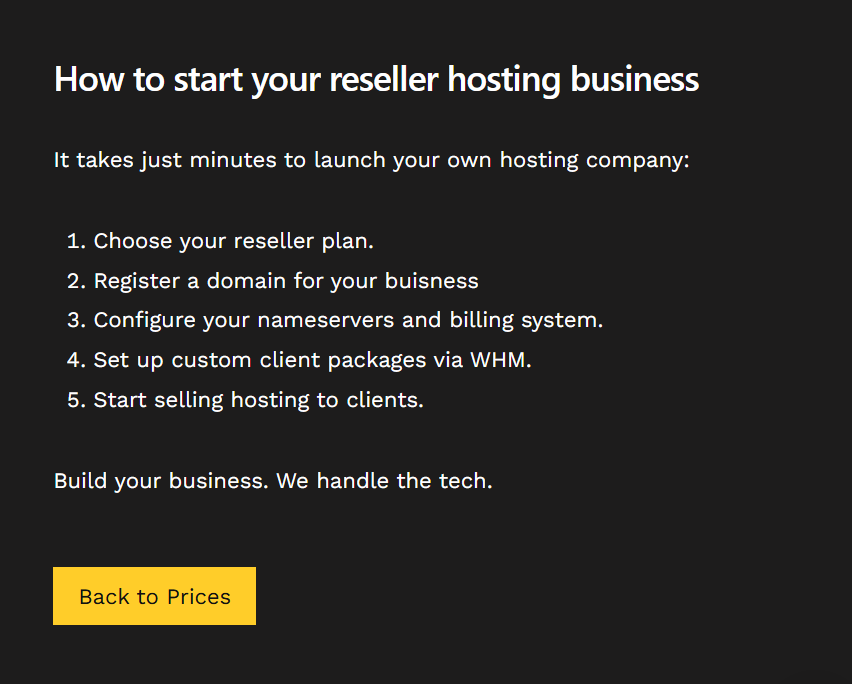
Reseller hosting lets you purchase hosting resources in bulk and sell them to clients under your own brand.
It is designed for web design agencies, developers, and IT service providers managing multiple client websites.
Why Server Location Matters in the UAE
The physical location of the server on which your website is hosted will impact your website’s loading speed and its visibility in local search results.
When a visitor in Dubai opens your website, their browser sends a request to your server and waits for a response. That round trip takes time, as distance is a major factor.
A server in Dubai will respond faster to a Dubai-based visitor than one in London or Singapore, even if both servers are technically fast.
Search engines factor server location into local search rankings. A website sitting on a UAE-based server sends a signal to Google that it is relevant to UAE-based searches.
What to Look For in a Web Host
A) Uptime Guarantees
Look for hosts offering 99.99% uptime guarantees backed by Service Level Agreements (SLAs) that include compensation when they fall short.
Also, look for transparent uptime history, not just marketing claims. Why? Nearly every host advertises 99.9% uptime. Do the math: that still permits roughly 8.7 hours of downtime per year.
B) Customer Support
There’s no room for compromise when it comes to customer support. When something breaks on your website, you need help immediately.
Look for 24/7 live chat or phone support. If a local point of contact is important, confirm whether the provider has UAE-based support staff.
C) Security Features
At minimum, your host should provide free SSL certificates for all domains, DDoS protection, a web application firewall, regular malware scanning, and automated backups.
Premium providers offer more advanced capabilities like AI-powered threat detection and brute force protection.
D) Backup and Recovery
Before signing with any host, ask two direct questions: how often do you back up websites, and how quickly can one restore from a backup? Daily automated backups are the minimum standard.
One-click restore from the control panel separates good hosts from genuinely reliable ones.
E) Upgrade Paths
The UAE’s digital economy is growing. Your web hosting in UAE needs in twelve months may look nothing like they do today.
Choose a provider that makes upgrading genuinely simple, not one that buries the process in complex pricing structures.
F) Arabic and RTL Support
If you are building a site for a UAE audience, Arabic language support matters.
Right-to-left (RTL) text rendering, correct character encoding for Arabic, and bilingual customer support are worth checking before you commit.
Not every international provider handles Arabic content well. Test with actual Arabic text before signing up.
How to Set Up Web Hosting in UAE

Ready to get started? Here is a practical walkthrough from choosing your domain to going live.
Ⅰ Choose and Register Your Domain
Your domain name is your website’s address. In the UAE, you have two main options:
.ae domains: These signal to users and search engines alike that your business is UAE-based.
Since 2025, registering a .ae domain no longer requires local residency, so it’s possible to set up web hosting in UAE as a foreigner. AEServer is an official UAE domain registrar for .ae domains.
.com domains: Still the most universally recognized extension. If brand recognition beyond the UAE matters to you, a .com may serve you better. Many businesses register both and point the .ae to their .com.
Ⅱ Choose Your Hosting Plan
Match the hosting type to your actual traffic and technical requirements, not to what sounds most impressive.
If you are launching a new site, start with shared web hosting in UAE and upgrade when your traffic data tells you to.
Ⅲ Set Up Your Account and Control Panel
After signing up, you get access to a control panel, usually cPanel. From here, you manage your files and create email addresses like [email protected].
Install WordPress or other CMS platforms with a single click, and handle domains and DNS settings.
Ⅳ Migrate an Existing Website
If you are moving from another host, the process involves transferring your website files and database to the new server.
Then, update your domain’s DNS settings to point to the new location. Most providers offer free migration support. Use it.
Ⅴ Connect Your Domain
If you registered your domain separately from your hosting, update your domain’s nameservers to point to your hosting provider.
Your provider will give you the nameserver addresses. The change can take up to 48 hours to propagate fully, though it often happens within a few hours.
Going Live Checklist
- SSL certificate installed and HTTPS working correctly
- All pages are loading on both desktop and mobile
- Contact forms tested and confirmed working
- Automated backups configured
- Analytics (Google Analytics or similar) installed
- Privacy policy publishing is required under the UAE PDPL for any site collecting user data
- Site speed tested via Google PageSpeed Insights
Common Web Hosting Mistakes
Even experienced website owners make hosting mistakes. Here are the most common ones in the web hosting in UAE context.
1) Choosing a Web Host Based on Introductory Price Alone
A plan that costs AED 20 per month in year one might jump to AED 80 on renewal. Always check the renewal price before signing up.
If a provider does not display it clearly, ask directly. If they are evasive about it, that tells you something.
2) Ignoring Server Location
For a business serving United Arab Emirates customers, hosting your site on a server in the US or Europe adds unnecessary latency.
Always confirm where the physical server will be located and choose a UAE or Middle East option when your audience is local.
3) Skipping Backups
Websites get hacked, servers fail, and human errors happen. Without a working backup, any of these events can mean losing your entire site and all its data.
Set up automated daily backups and periodically test that they actually restore correctly.
4) Not Reading the Terms of Services
Some providers advertising unlimited storage or bandwidth bury restrictions in their terms of service.
Read the fine print before you pay. Plans that sound too good usually have catches.
5) Ignoring TDRA Compliance
If your site serves UAE users, UAE rules apply regardless of where your server lives.
Hosting content that breaches TDRA guidelines can result in your site being blocked for all UAE users.
6) Skipping Performance Testing
Do not assume your site is fast. Test it before you go live and revisit periodically.
Google PageSpeed Insights, GTmetrix, and Pingdom are all free and will tell you exactly how your site performs and what is slowing it down.
Wrapping Up
Choosing a web host in the UAE is not the most glamorous part of building an online presence.
But few decisions have as much day-to-day impact on how your site performs, how secure it is, and whether customers can actually reach it.
Match your hosting type to your real needs. Start with shared hosting and scale to VPS or dedicated when your traffic and complexity genuinely require it.
Ready to launch your online presence in the United Arabs Emirates? Take a look at Truehost’s web hosting in UAE plans.