 Domain SearchSecure your perfect UAE domain in seconds.
 Domain TransferSeamless domain transfer. Zero downtime, complete control.
 All TLDsSecure your ideal domain. Explore local UAE and international extensions.
 WHOIS LOOKUPCheck domain ownership, expiry dates, and registrar details instantly.
 AE DomainRegister a .AE domain and build trust in the UAE.
 SSL CertificatesProtect your site with trusted SSL Certificates to secure data and build customer confidence.
 .com DomainGet the world’s most trusted domain and build credibility from day one.
 Web hostingFind budget-friendly hosting that doesn’t compromise on performance.
 Windows HostingHigh-performance hosting for Windows applications and websites.
 Affiliate ProgramBecome a partner and earn commission for every referral.
 WordPress HostingBlazing-Fast WordPress Hosting, Optimised for Performance.
 Email HostingSecure your communications with professional email hosting. Use your domain, stay in control.
 Reseller HostingLaunch your own hosting brand. We handle the tech, you grow your business.
 cPanel HostingHosting supported by cPanel (simple and user-friendly)
 VPS HostingVirtual servers that grow with you. Full root access. Blazing fast performance.
 Managed VPS HostingNot a tech expert? Let us handle everything with our fully managed VPS hosting.
 Dedicated ServersEnjoy full access and total control over your dedicated physical server.
 AI Website BuilderBuild beautiful websites instantly with AI.
 Online ShopCreate a professional online store. No coding needed.
 Web Design ServicesGet a custom website built for your brand and your goals.
 BlogDiscover resources on web hosting, e-commerce, digital marketing, and beyond.
 Contact UsWe are available 24/7 via chat or email
 SupportExplore guides and answers for all our services
At some point, your website stops being a hobby and starts being your business. You should upgrade your hosting plan to reflect that, too.
You launch your website, spend weeks fine-tuning every detail. Everything is going great at first, but one day you notice that pages are taking forever to load.
This slowdown happens because most website owners start with a basic shared hosting plan. Over time, though, what was once a great fit starts to feel like wearing shoes two sizes too small.
This guide covers the ten clearest signs that your current hosting plan is holding you back.

1) Your Website Is Loading Painfully Slow
Speed matters more than most people realize. Research consistently shows that visitors expect a website to load in under 3 seconds, and a large portion will leave if it doesn’t.
If your pages are taking five, six, or even ten seconds to load, you are not just annoying your visitors; you are frustrating them. You are actively losing them.
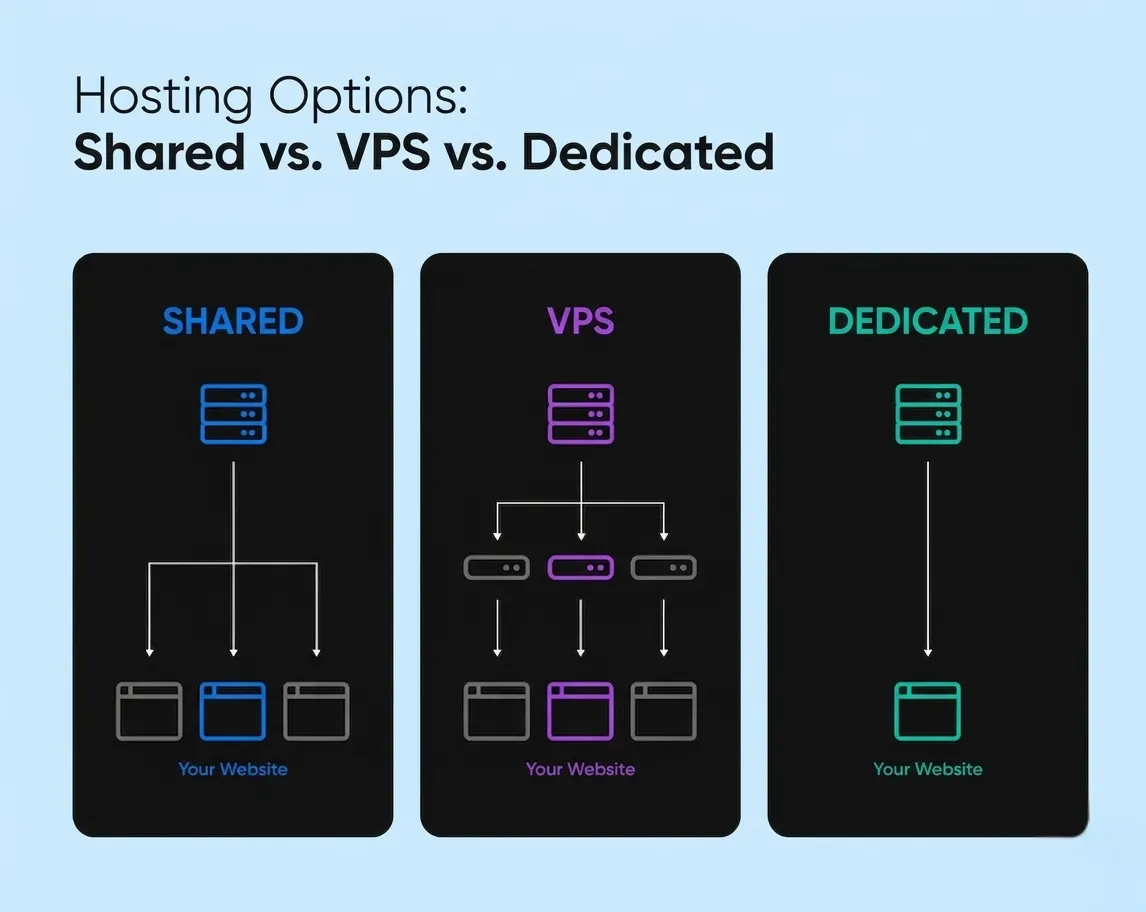
Shared hosting, which is the most common entry-level option, works by placing dozens or even hundreds of websites on a single server.
When one of those sites gets a traffic surge, everyone else on the server pays the price. Your site ends up waiting in line for server resources that are already stretched thin.
Beyond the user experience issue, slow loading times directly hurt your SEO. Google uses page speed as a ranking factor, which means a sluggish site slides down the search results page over time.
Upgrading to a VPS (Virtual Private Server) or a managed hosting plan gives your site dedicated resources, meaning your load times are no longer at the mercy of other websites sharing your server.
2) Getting Hit With Frequent Downtime
Every minute your website is down is a minute a potential customer cannot find you.
Hosting providers often advertise 99.9% uptime. Even that small fraction of downtime adds up to roughly eight hours of outages per year.
Lower guarantees, such as 99.5% uptime, translate to over 40 hours of downtime annually, which is a serious problem for any business.
A free tool like UptimeRobot can monitor your site around the clock and alert you whenever it goes down.
If you are getting notifications several times a week or month, that pattern is a clear sign your current host is not delivering reliable service. It’s time to upgrade your hosting plan.
Better Stack is another strong option if you want more detailed incident reporting.
3) Your Traffic Has Grown Significantly
Growth is a great problem to have. Getting more visitors to your site means your content is resonating. Your marketing is working, and your business is gaining momentum.
The catch is that more traffic puts more strain on your server, and entry-level hosting plans are not built to scale gracefully.
A shared hosting plan designed for a site getting 5000 monthly visitors starts to crack under the weight of 500,000.
Pages load slowly, then stop loading altogether. Server errors become more frequent.
In some cases, your hosting provider may actually suspend your account temporarily for “using too many resources,” which is a frustrating consequence of your own success.
When traffic growth becomes consistent rather than occasional, that is the right time to look at plans with higher resource allocations.
VPS hosting and cloud hosting both allow you to handle greater loads without the instability that comes from sharing resources with hundreds of other sites.
4) You Keep Running Into Resource Limit Errors
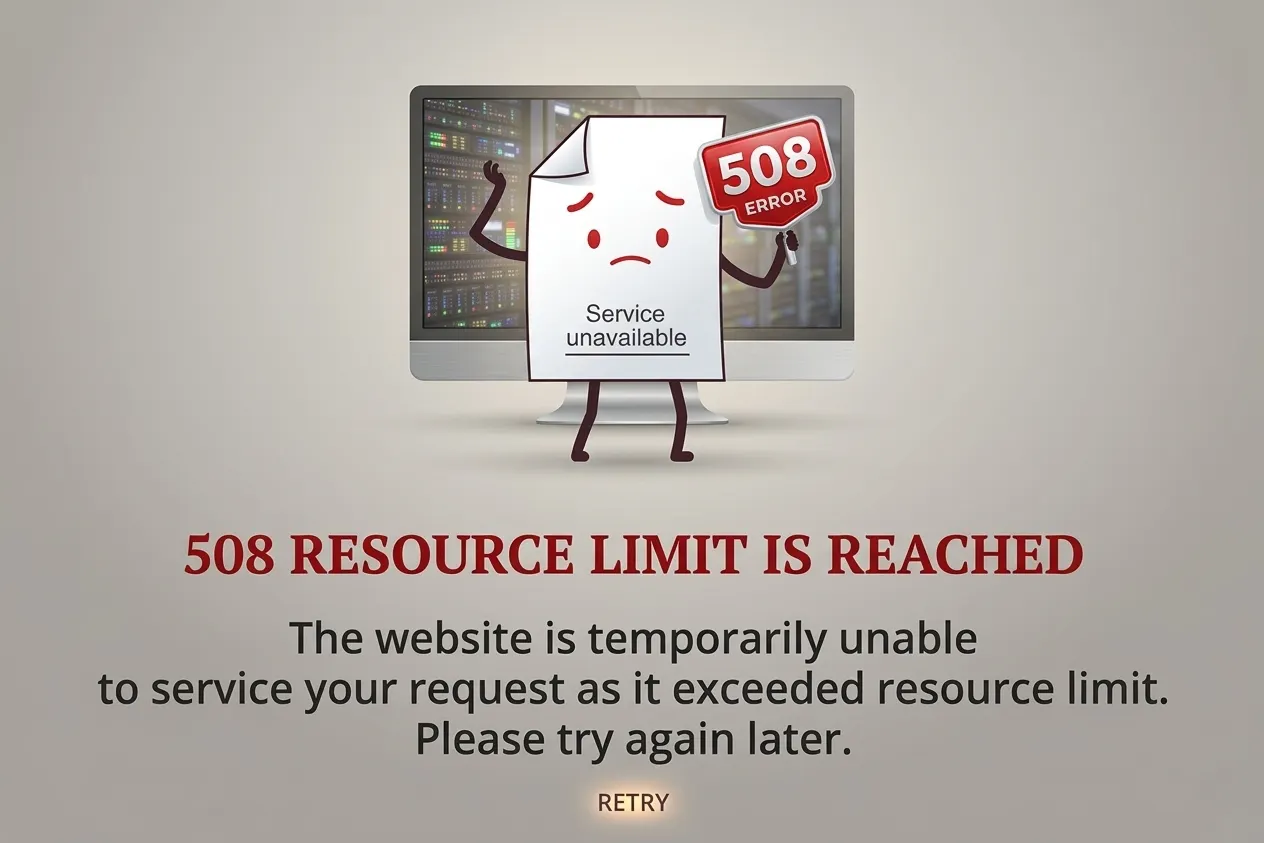
Every hosting plan comes with limits. CPU usage, RAM, bandwidth, and disk space all have a ceiling.
When your site hits those ceilings, your host throttles your performance or throws errors entirely. On a basic shared plan, those limits can be surprisingly low.
Resource limit errors can appear in many ways. You might see a “503 Service Unavailable” message, a white screen of death on WordPress.
It can be a generic server error page that leaves visitors confused and frustrated. Behind the scenes, your hosting account has reached its limit.
Most hosting dashboards let you check your current resource usage. Log in to your control panel and look for a usage statistics section.
If you are consistently hitting 80% or more of your CPU or memory limits, you are already running on borrowed time.
It’s time to upgrade your hosting plan with higher resource allocations, which will give your site the breathing room it actually needs.
5) Your Site Has Been Hacked or Compromised
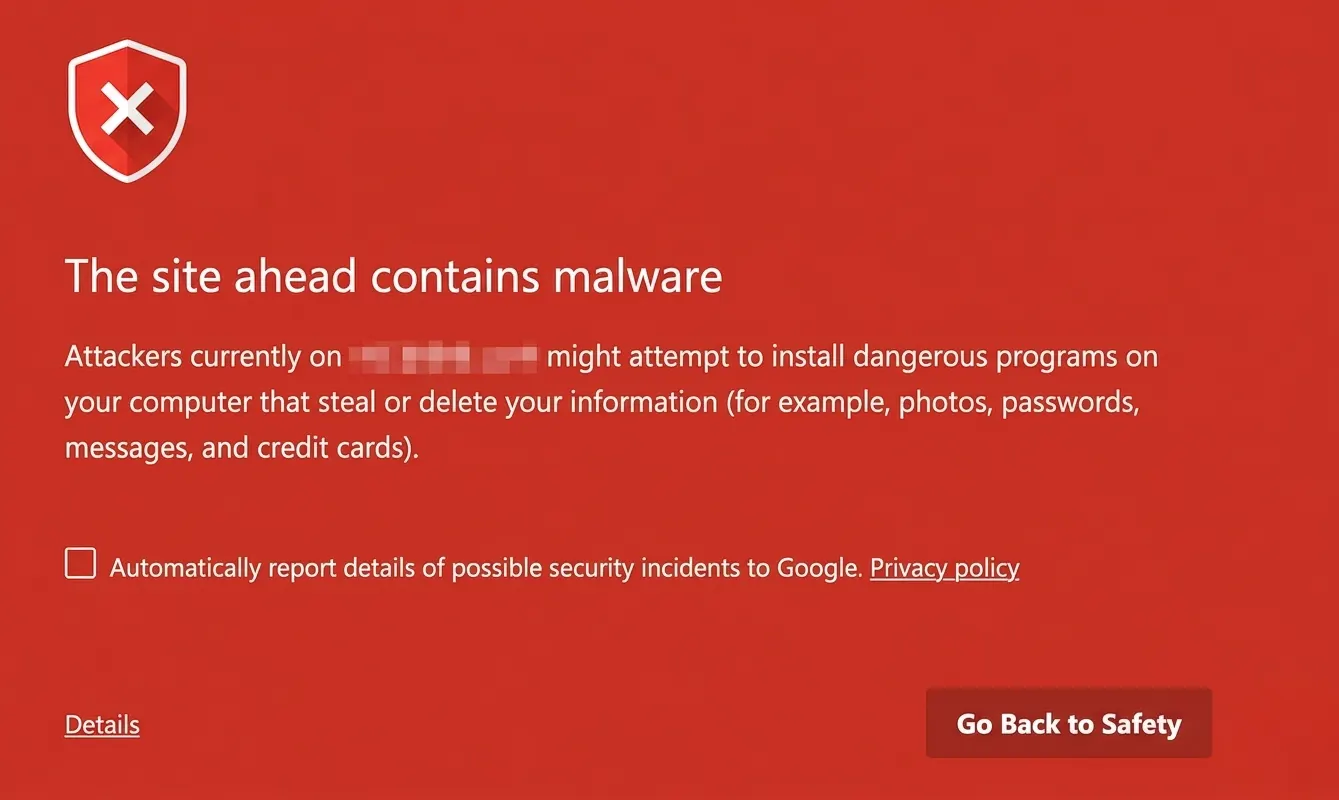
One of the less-talked-about downsides of shared hosting is what security experts call the “bad neighbor” risk.
When hundreds of websites share the same server environment, bad actors can exploit a vulnerability in one to gain access to others on the same machine.
If one of your server neighbors has a poorly maintained WordPress installation or an unpatched plugin, your site can end up paying for their oversight.
Basic hosting plans also tend to cut corners on security features. They may offer a free SSL certificate.
However, features like web application firewalls, malware scanning, real-time threat detection, and isolated account environments are often reserved for higher-tier plans or sold as expensive add-ons.
When comparing upgraded hosting options, ask specific questions: Does the plan include a web application firewall? Are accounts isolated from each other? Is there automatic malware detection?
A good hosting provider will answer those questions clearly and without hesitation.
6) You Are Running an e-Commerce Store or High-Traffic Blog
Not all websites are created equal in terms of the resources they demand from servers.
A simple brochure website with five static pages and a contact form is a very different beast compared to an e-Commerce store processing 200 transactions a day.
This is also different from a blog publishing new content multiple times a week to a large audience.
you can upgrade your hosting plan to managed e-Commerce hosting, which is worth serious consideration for store owners.
They come with server-level caching, optimized PHP configurations, and support teams that actually understand the platform.
7) Your Customer Support Experience Has Been Terrible
There is a quiet hierarchy in how hosting companies treat their customers, and it largely follows the tier of their plan.
Budget plan customers often get routed to a ticketing system that can take 24 to 48 hours to respond. By the time help arrives, a sale has been lost, a visitor has bounced, or a security issue has had hours to worsen.
Premium and mid-tier plans tend to come with significantly better support access. That means 24/7 live chat with knowledgeable agents, phone support for urgent issues, and faster average response times.
When your website is your business, waiting two days for a reply to a support ticket is not acceptable.
When evaluating an upgrade, pay attention to the hosting company’s support reputation. Check review platforms like Trustpilot, G2, and Hosting Advice for patterns in customer complaints.
If slow or unhelpful support comes up repeatedly in reviews, that is a sign to look elsewhere, regardless of how attractive the pricing looks.
8) Lack of a Backup System in Place
Every website needs automatic backups. This is one of those things that seems easy to put off until something goes wrong, and then it becomes the most important thing in the world.
A hacked site, a botched plugin update, an accidental file deletion, a server hardware failure: any of these can wipe out months or years of work in an instant.
Many basic hosting plans either skip daily backups entirely or offer them as a paid add-on.
Some provide weekly backups stored on the same server as your site, which defeats much of the purpose, since a server failure could wipe both your site and the backups simultaneously.
A solid backup system performs daily automatic backups and stores them in an off-site location separate from your main server.
It should also retain multiple restore points so you can go back days or weeks if needed. The firm should also offer one-click restoration without requiring technical expertise.
Upgraded hosting plans typically include this level of backup infrastructure as a standard feature, not a premium add-on.
9) You Are Paying for Too Many Add-Ons to Keep Up
The budget hosting model often works like a bait-and-switch. The headline price looks amazing, sometimes just a dollar or two per month.
Then you realize that SSL certificates, daily backups, malware scanning, CDN access, and a staging environment all cost extra. By the time you have added everything your site actually needs, the bill is far higher than you expected.
A good all-inclusive plan at the mid-to-premium level should include a free SSL certificate and CDN integration for faster global load times. Daily automated backups, a staging environment for testing changes before pushing them live, and malware scanning.
If your current plan charges extra for any of those, it may be time to do the math.
10) Your Business Has Outgrown Your Current Plan
There comes a point where your website stops being a side project or an experiment and becomes a genuine business asset.
Your site is responsible for generating leads, processing sales, representing your brand, and building your audience. The standards it needs to meet are fundamentally different from when you were just getting started.
Signs that your business has outgrown its current plan often overlap with the other signs on this list: persistent slowness, recurring downtime, security incidents, and support frustrations.
There is also a broader mindset question worth asking. Are you treating your website as a mission-critical asset and giving it the infrastructure that reflects that?
Depending on where your site is in its growth, it may be time to look at managed hosting, cloud hosting that scales resources dynamically with demand, or even a dedicated server.
Before making that decision, do a quick self-audit: How often does my site experience performance issues? Am I backing up my data? Am I losing customers or revenue during site outages?
If the answers to those questions concern you, the conversation about the upgrade is well overdue.
Conclusion
As your UAE website grows, you will need to upgrade your hosting plan. Think of it as an investment in additional reliability and performance.
After all, a faster site converts better and ranks higher in search results. Upgrading your hosting plan also provides additional web security for your customers.
Ready to upgrade your hosting plan? Truehost offers a wide range of web hosting packages, from managed cloud hosting to VPS and dedicated servers.