 Domain SearchSecure your perfect UAE domain in seconds.
 Domain TransferSeamless domain transfer. Zero downtime, complete control.
 All TLDsSecure your ideal domain. Explore local UAE and international extensions.
 WHOIS LOOKUPCheck domain ownership, expiry dates, and registrar details instantly.
 AE DomainRegister a .AE domain and build trust in the UAE.
 SSL CertificatesProtect your site with trusted SSL Certificates to secure data and build customer confidence.
 .com DomainGet the world’s most trusted domain and build credibility from day one.
 Web hostingFind budget-friendly hosting that doesn’t compromise on performance.
 Windows HostingHigh-performance hosting for Windows applications and websites.
 Affiliate ProgramBecome a partner and earn commission for every referral.
 WordPress HostingBlazing-Fast WordPress Hosting, Optimised for Performance.
 Email HostingSecure your communications with professional email hosting. Use your domain, stay in control.
 Reseller HostingLaunch your own hosting brand. We handle the tech, you grow your business.
 cPanel HostingHosting supported by cPanel (simple and user-friendly)
 VPS HostingVirtual servers that grow with you. Full root access. Blazing fast performance.
 Managed VPS HostingNot a tech expert? Let us handle everything with our fully managed VPS hosting.
 Dedicated ServersEnjoy full access and total control over your dedicated physical server.
 AI Website BuilderBuild beautiful websites instantly with AI.
 Online ShopCreate a professional online store. No coding needed.
 Web Design ServicesGet a custom website built for your brand and your goals.
 BlogDiscover resources on web hosting, e-commerce, digital marketing, and beyond.
 Contact UsWe are available 24/7 via chat or email
 SupportExplore guides and answers for all our services
The UAE ecommerce sector is growing at over 10% annually. More stores are coming online, and competition at checkout is getting tighter.
Your payment gateway is where that competition plays out. A slow redirect, a missing payment method, or a compliance gap can cost you the sale.
This guide walks you through the top payment gateways for UAE e-commerce and how to stay on the right side of CBUAE requirements.
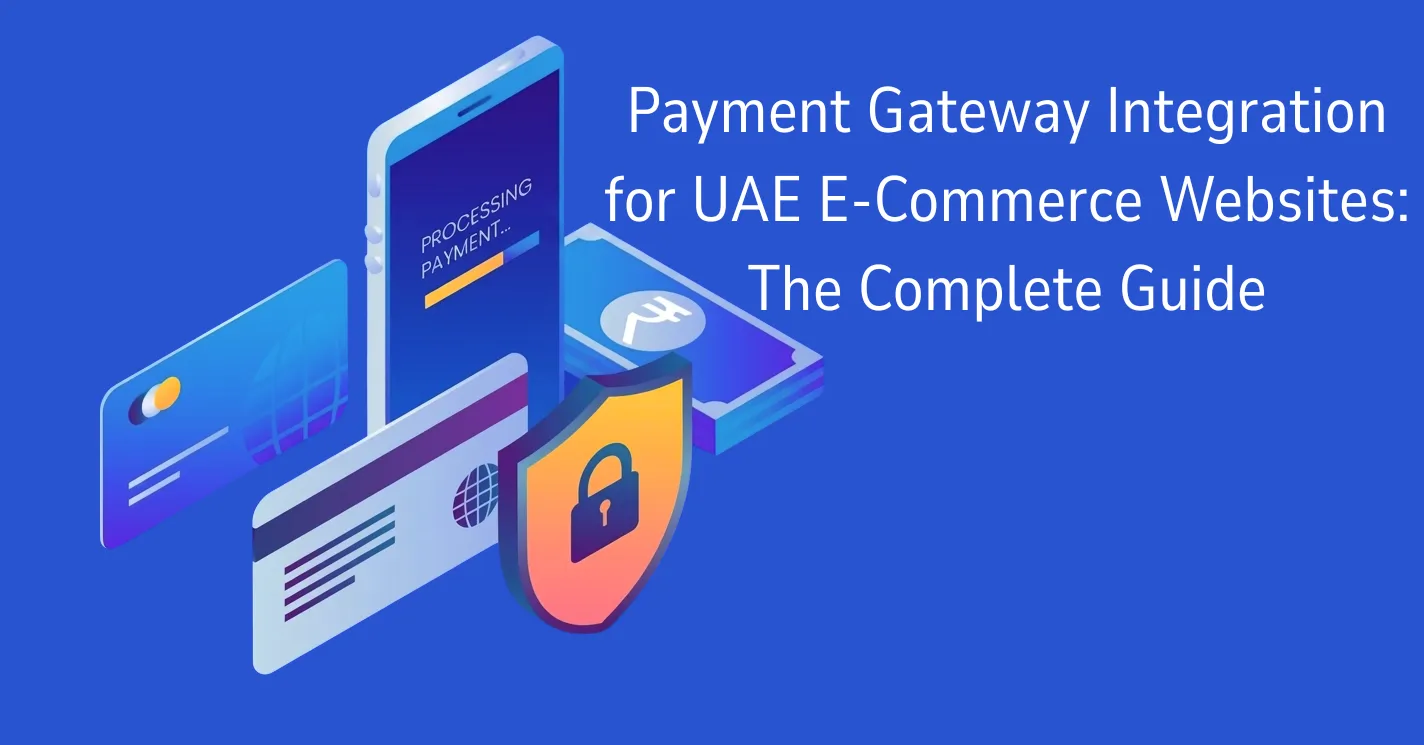
What a Payment Gateway Actually Does in the UAE
A payment gateway sits between your online store and the banking system. It is the technology that moves a payment from your customer to your bank account.
In the UAE, the transaction passes through four parties in sequence.
1) The customer enters card details on your checkout page.
2) Your payment gateway encrypts and forwards those details to an acquiring bank.
3) The acquiring bank sends the request through a card network, such as Visa or Mastercard.
4) The issuing bank (the customer’s bank) approves or declines. The result flows back in reverse.
This entire process takes two to three seconds.
Types of Payment Gateway Integrations
1) Hosted Payment Gateways
The customer gets redirected to the gateway’s payment page. PayPal and PayStack are good examples of this. The merchant does not handle sensitive card data directly.
2) Self-Hosted Payment Gateways
The payment form lives on the merchant’s own website. The business collects and sends data to the gateway. This gives more control but requires stronger security measures.
3) API-Based Payment Gateways
These work through direct API integration with your platform. Stripe and Flutterwave are popular examples of this type. Developers get full control over the checkout experience.
4) Local Bank Integration Gateways
The integration connects directly with local or regional banks. They work well in markets where global gateways have limited reach.
5) Mobile Payment Gateways
Mobile gateways are built specifically for smartphone transactions. They support mobile wallets like Apple Pay and Google Pay. Tap-to-pay and QR code payments fall here, too.
6) Crypto Payment Gateways
These accept digital currencies like Bitcoin or Ethereum. BitPay is one of the more recognized platforms for this. Merchants can receive crypto and convert it to local currency.
7) iFrame Integration
An iFrame integration loads the gateway’s payment form directly inside your webpage.
Customers complete their payment without ever leaving your site. This creates a smoother, more consistent checkout experience.
CBUAE Licensing and Legal Requirements You Cannot Ignore
The Central Bank of the UAE (CBUAE) governs all payment activity in the country.
A payment gateway license from CBUAE is compulsory for any company providing payment services here.
Every licensed payment service provider must implement PCI-DSS encryption and comply with strict Anti-Money Laundering (AML) and Know Your Customer (KYC) rules.
What E-Commerce Merchants Must Comply With
As a merchant, you do not need a CBUAE payment gateway license yourself. That obligation sits with your gateway provider.
You are still responsible for compliance within your own environment.
PCI DSS Level 1 certification and 3D Secure authentication are baseline requirements for payment processing in the UAE. Failure to comply can lead to penalties or suspended operations.
PCI DSS defines four merchant levels based on annual transaction volume:
Level 1: Over 6 million transactions per year. Requires a full on-site audit by a Qualified Security Assessor (QSA).
Level 2: 1 million to 6 million transactions per year. Requires an annual Self-Assessment Questionnaire (SAQ) and quarterly network scans.
Level 3: 20,000 to 1 million transactions per year. Requires an SAQ and quarterly scans.
Level 4: Under 20,000 transactions per year. Requires an SAQ.
The 6 Best Payment Gateways for UAE E-Commerce (Compared)
No single gateway is the best option for every business. The right choice depends on your transaction volume, platform, customer base, and growth plans.
Each gateway below is evaluated on six criteria: CBUAE licensing status, transaction fees, platform integrations, supported payment methods, settlement speed, and fraud protection tier.
Telr
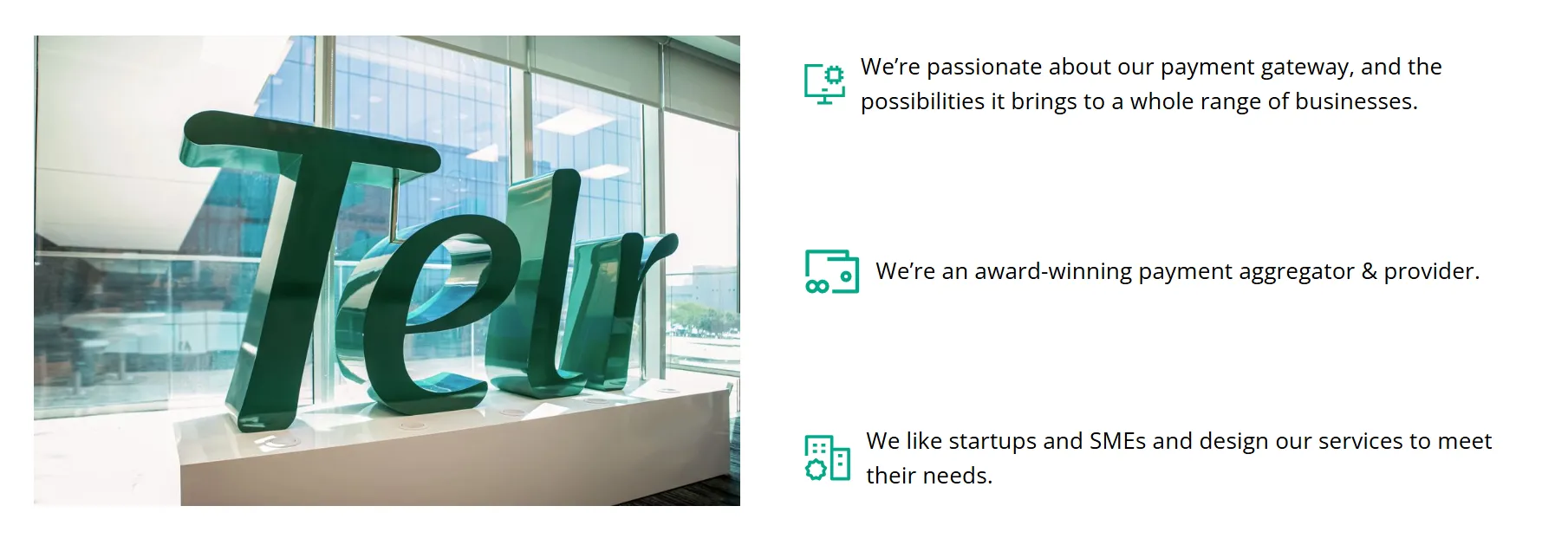
Telr has over 20 years of experience in payments technology. It operates in 120+ countries and has no setup fee.
Telr integrates natively with WooCommerce, OpenCart, PrestaShop, Shopify, and Magento.
The Starter plan costs AED 349 per month. The Pro plan is AED 99 per month, with a 2.49% fee plus AED 0.50 per transaction.
Telr supports Visa, Mastercard, American Express, net banking for Indian banks, and SADAD for Saudi Arabian banks.
It also offers buy now, pay later through a partnership with Tabby.
Best fit: SMEs and startups looking for a fast setup with Shopify or WooCommerce.
Settlement speed: T+2 business days.
Fraud tools: Real-time monitoring with Telr Secure, anti-fraud rules, and 3D Secure support.
PayTabs
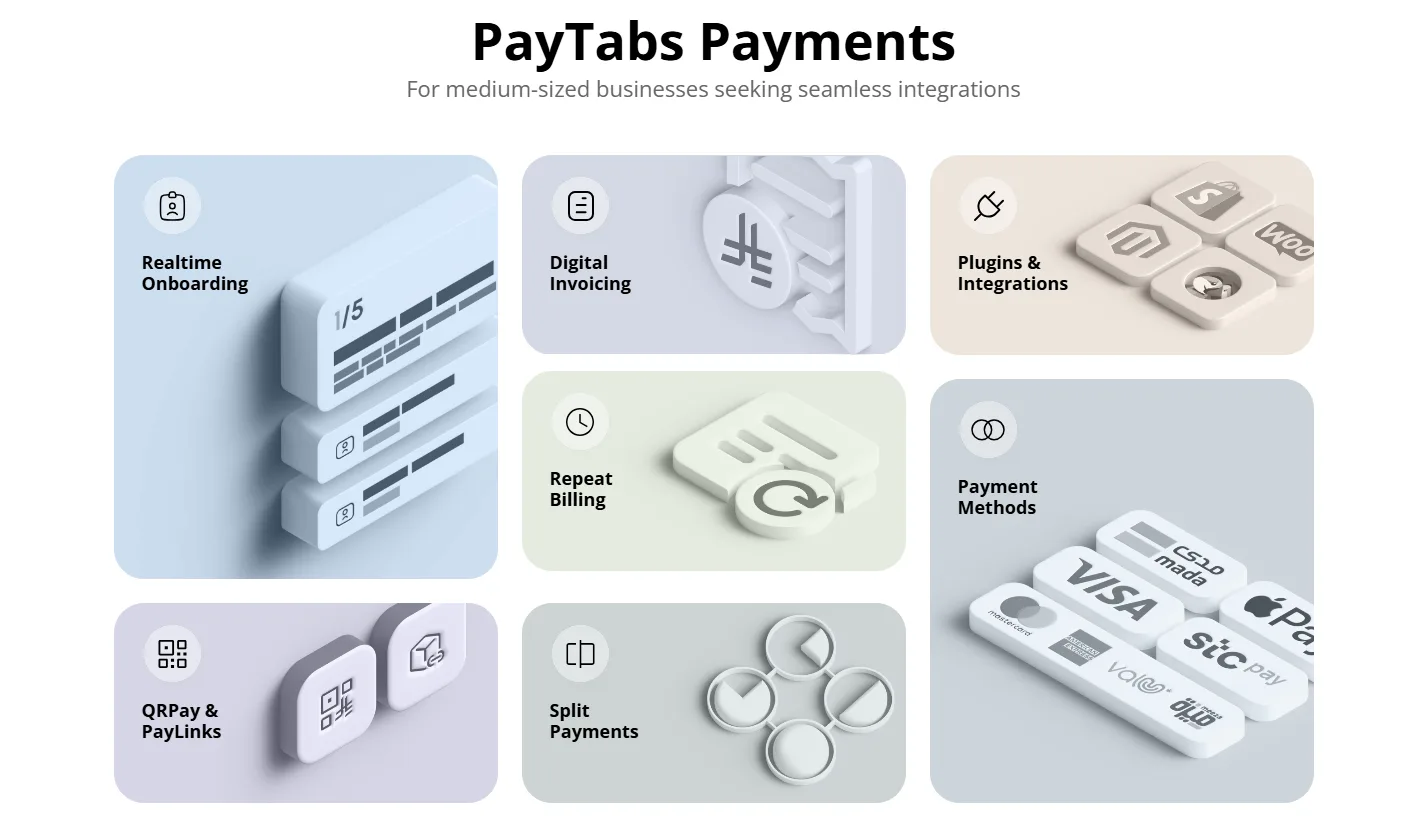
PayTabs was founded in 2014 by Saudi entrepreneur Abdulaziz Al Jouf. It has grown into an AI-powered payment orchestration platform for MENA merchants.
Setup can be completed in under one day. PayTabs works with Magento, WooCommerce, CS-Cart, Shopify, OpenCart, and PrestaShop.
The gateway accepts Visa, Mastercard, American Express, Mada, and STCPay.
PayTabs transaction fees average around 2.85%. Monthly fees vary based on plan and volume.
Best fit: Merchants needing MENA-wide reach and AI-driven smart routing.
Settlement Speed: T+1 business day.
Checkout
Checkout.com targets mid-market and enterprise merchants. It offers adaptive authentication, enterprise-level fraud management, and multi-currency pricing.
Pricing is custom and negotiated based on volume. Settlement is typically T+1 to T+2, depending on currency and acquiring arrangement.
Best fit: High-volume stores with international customer bases.
Settlement Speed: T+1 to T+2, depending on currency and acquiring arrangement.
Stripe (UAE via DIFC)
Stripe operates in the UAE through its DIFC entity. This means it is regulated by the DFSA, not by the CBUAE directly.
Stripe has native integrations with Shopify, WooCommerce, and most major platforms.
Stripe supports over 135 currencies and 100+ payment methods. It acquires transactions via Network International in the UAE.
The standard transaction fee is approximately 2.9% plus AED 1.
Best fit: Tech-forward businesses and subscription-based retailers that need advanced APIs.
Settlement Speed: 1-3 business days for standard payouts.
Network International
Network International has been operating in the UAE since 1994. Its N-Genius platform provides 3D Secure, multi-currency pricing, fraud prevention, and next-day settlements.
The platform also powers contactless payments and loyalty programs for retail clients.
Best fit: Retailers running both physical and online stores on a unified platform.
Settlement speed: T+1 Day is among the fastest in major UAE gateways.
Tap Payments
Tap Payments holds a license in every GCC market, including the UAE.
A single contract and a single integration cover your expansion across the entire region.
Tap offers developer-friendly API and SDK documentation, a one-click Shopify integration, and a local team of payment experts based in the UAE.
Best fit: UAE businesses planning short-term GCC expansion.
Settlement Speed: Next-day payouts.
How to Integrate a Payment Gateway
There are three main integration paths. Each one suits a different technical setup and compliance situation.
Option 1: Plugin Integration
Plugin integration is the fastest path for most small and mid-sized UAE stores. You do not need a developer for the initial setup.
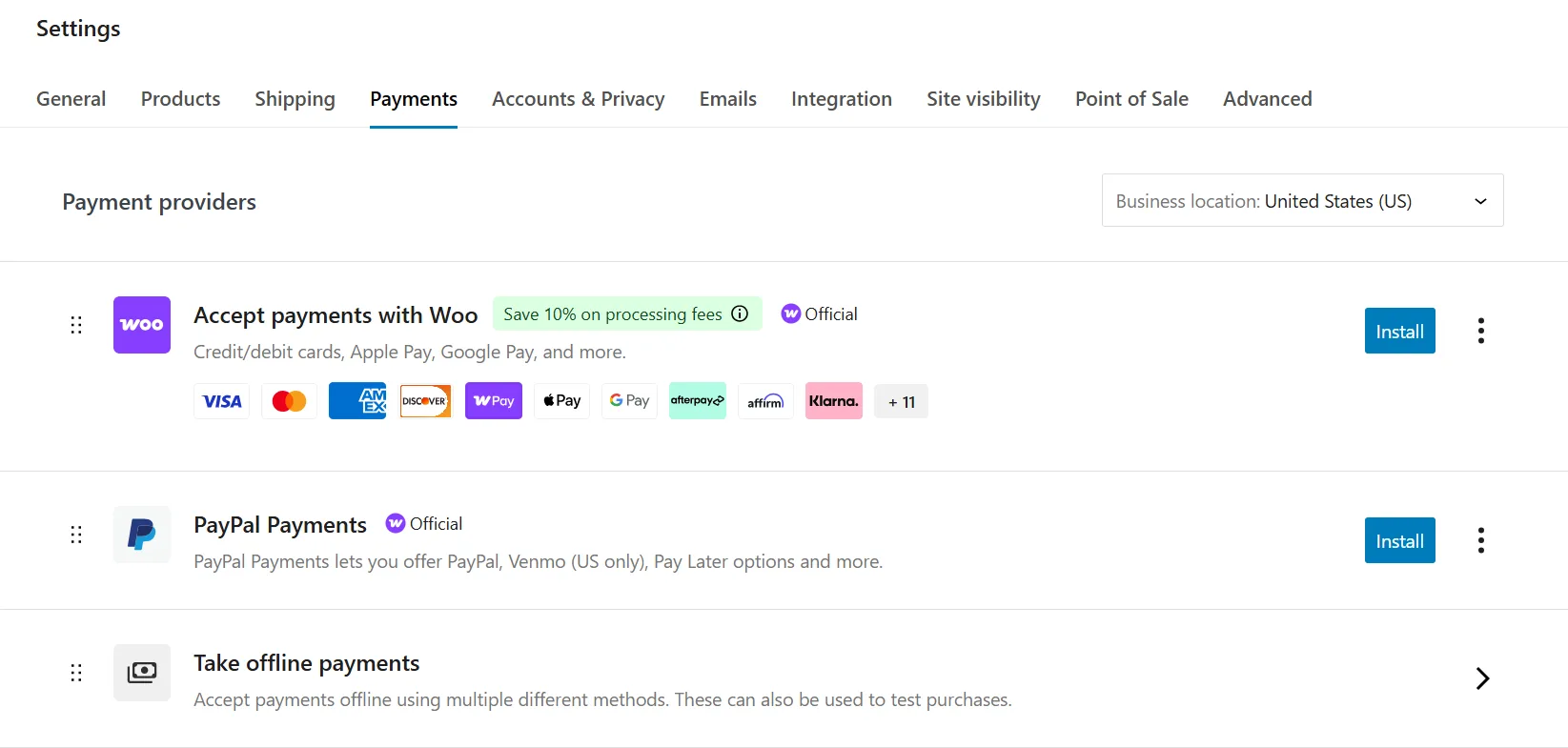
- Log in to your WooCommerce admin panel.
- Search for your chosen gateway in the plugin or app store.
- Install the plugin and activate it.
- Navigate to the gateway settings and enter your API key and secret key. You get these from your gateway merchant dashboard.
- Enter the webhook URL. This is the URL the gateway calls to notify your site when a payment completes. Copy it exactly as shown. A typo here will break order confirmation emails.
- Switch to test mode and run a test transaction with a sandbox card.
- Review the test order in your admin panel. Confirm stock updated and the confirmation email fired.
- Switch to live mode and run a real low-value transaction to verify the full flow.
Below is a quick reference for which gateways offer native plugins versus third-party plugins for each major platform.
| Gateway | Shopify | WooCommerce | Magento |
|---|---|---|---|
| Telr | Native | Native | Native |
| PayTabs | Native | Native | Native |
| Stripe | Native | Native | Third-party |
| Checkout.com | Native | Native | Native |
| Network Int. | Third-party | Third-party | Native |
| Tap Payments | Native | Third-party | Third-party |
Option 2: iFrame Integration
iFrame integration loads the gateway’s payment form inside your checkout page. Customers never leave your site, which protects conversion rates.
iFrame integration lets businesses collect card credentials on their own checkout page without full PCI DSS certification. Customers complete payment without any redirect.
There are two non-negotiable requirements for iFrame integration.
1) HTTPS and a valid SSL certificate on the parent page. Browsers block mixed-content iFrames on HTTP pages.
2) Correct Content Security Policy (CSP) headers on your server. These headers must explicitly allow the gateway’s domain as a trusted source.
A missing CSP entry causes the iFrame to be blocked silently with no error shown to the customer.
Option 3: Direct API Integration
Direct API integration gives you the most control over the checkout experience.
Your server sends card data directly to the gateway’s API. In return, the gateway returns a transaction result.
The basic flow works as follows:
Tokenization call: Your JavaScript (e.g., Stripe.js or Telr’s JS SDK) collects card details in the browser. It sends them directly to the gateway, which returns a one-time token.
Charge call: Your server sends that token (never the raw card number) to the gateway’s charge endpoint. You include the amount, currency (AED), and order reference.
Webhook confirmation: The gateway sends a POST request to your webhook URL with the final transaction status. Your server updates the order accordingly.
Direct API integration requires PCI DSS certification when your server handles raw card data before passing it to the gateway.
You can also significantly reduce your PCI DSS scope. Use the gateway’s JavaScript tokenization library instead of collecting card numbers yourself.
Card data is sent directly from the customer’s browser to the gateway. Your server only ever sees the token.
Payment Methods UAE Shoppers Expect at Checkout
UAE shoppers have high expectations. Offering only credit cards will cost you sales. Customers expect a range of payment options before they trust a checkout.
The payment methods UAE shoppers regularly look for at checkout include:
Cards: Visa, Mastercard, and domestic debit cards are the baseline. Every UAE gateway supports them.
Digital wallets, such as Apple Pay and Google Pay, are popular with mobile-first shoppers. Both require domain verification files placed at a specific URL path on your server.
Bank transfers and QR payments: Instant options used by a growing share of local consumers.
Buy Now, Pay Later (BNPL): Growing across fashion, electronics, and lifestyle categories. Tabby and Tamara dominate the UAE BNPL space and are already integrated with Telr, PayTabs, and Checkout.com.
Cash on delivery: Still relevant for select segments in the UAE market, particularly for first-time customers who are building trust with a new brand.
Conclusion
Setting up a payment gateway for the first time feels like a lot. Licenses, compliance levels, API keys, webhooks, and VAT configuration.
The difference between a smooth setup and a frustrating one usually comes down to knowing what to check before going live.
Get the integration right, stay compliant, and keep an eye on how the CBUAE updates its RPSCS framework.
Truehost online shop hosting plans support all regional and global payment gateways that you might need to boost your UAE online store.