 Domain SearchSecure your perfect UAE domain in seconds.
 Domain TransferSeamless domain transfer. Zero downtime, complete control.
 All TLDsSecure your ideal domain. Explore local UAE and international extensions.
 WHOIS LOOKUPCheck domain ownership, expiry dates, and registrar details instantly.
 AE DomainRegister a .AE domain and build trust in the UAE.
 SSL CertificatesProtect your site with trusted SSL Certificates to secure data and build customer confidence.
 .com DomainGet the world’s most trusted domain and build credibility from day one.
 Web hostingFind budget-friendly hosting that doesn’t compromise on performance.
 Windows HostingHigh-performance hosting for Windows applications and websites.
 Affiliate ProgramBecome a partner and earn commission for every referral.
 WordPress HostingBlazing-Fast WordPress Hosting, Optimised for Performance.
 Email HostingSecure your communications with professional email hosting. Use your domain, stay in control.
 Reseller HostingLaunch your own hosting brand. We handle the tech, you grow your business.
 cPanel HostingHosting supported by cPanel (simple and user-friendly)
 VPS HostingVirtual servers that grow with you. Full root access. Blazing fast performance.
 Managed VPS HostingNot a tech expert? Let us handle everything with our fully managed VPS hosting.
 Dedicated ServersEnjoy full access and total control over your dedicated physical server.
 AI Website BuilderBuild beautiful websites instantly with AI.
 Online ShopCreate a professional online store. No coding needed.
 Web Design ServicesGet a custom website built for your brand and your goals.
 BlogDiscover resources on web hosting, e-commerce, digital marketing, and beyond.
 Contact UsWe are available 24/7 via chat or email
 SupportExplore guides and answers for all our services
TLS isn’t just a technical checkbox anymore. For UAE businesses, it’s become a non-negotiable part of doing business online.
Here’s the reality. Your customers expect it. Google demands it. Payment processors require it.
And if you’re not paying attention, you’re losing money right now. Every single day.
The Shifting Security Landscape in UAE’s Digital Economy
Something changed in the UAE’s digital marketplace over the past few years. Security went from optional to expected.
Dubai’s e-commerce sector grew by 53% in 2024 alone. With that growth came increased sophistication from both customers and cybercriminals.
Your website’s security directly impacts your bottom line now. Not in some abstract future way—today, this month, this quarter.
What TLS Actually Protects
You know that little padlock icon in your browser’s address bar? That’s TLS encryption at work.
TLS stands for Transport Layer Security. It’s the technology that scrambles data flowing between your website and your visitors.
When someone fills out a contact form, TLS encrypts it. Credit card numbers? Scrambled. Personal information? Protected end-to-end.
Without it, you’re broadcasting customer data in plain text. Anyone between your server and your customer can intercept it. That includes coffee shop WiFi hackers, malicious ISPs, and organized cybercrime operations.
Think about the UAE’s café culture. Half your customers browse while sipping coffee at Tom & Serg or % Arabica. Without TLS, their data is vulnerable at every café WiFi network they use.
The Business Case Nobody Talks About
TLS compliance protects three things simultaneously: your revenue, your reputation, and your legal standing.
Revenue protection comes from maintaining payment processor relationships. Stripe, PayPal, Telr, and every major payment gateway requires HTTPS for processing transactions.
No TLS? No payments. It’s that simple.
Reputation protection matters in Dubai’s tight-knit business community. Word travels fast here. One security incident can tank years of relationship-building.
Legal standing relates to UAE’s Data Protection Law and cybersecurity frameworks. While there isn’t a specific “SSL fine,” businesses face significant liability if customer data gets compromised due to inadequate security measures.
Who Really Needs This
Let’s break down which UAE businesses should treat TLS as mandatory:
-
E-commerce stores (obvious, but worth stating)
-
Service businesses with online booking
-
Restaurants and cafés with ordering systems
-
Real estate agencies collecting buyer information
-
Healthcare providers managing patient data
-
Educational institutions handling student records
-
Corporate websites with any forms
-
Professional services (legal, financial, consulting)
-
Portfolio sites collecting contact information
Running even a simple business card website? If there’s a contact form, you need TLS.
The line is clear: any data collection requires encryption.
The Real Cost of Operating Without TLS in UAE
Money talks in business. So let’s talk actual numbers and real consequences.
Google’s algorithm actively penalizes non-HTTPS websites. We’re not talking minor adjustments, your rankings can drop 30-50 positions.
Google’s Penalty Is Crushing UAE Businesses
Google started favoring HTTPS websites in 2014. By 2025, they’re aggressive about it.
According to Google’s Transparency Report, over 95% of websites globally now use HTTPS. In competitive markets like Dubai, being in that 5% means invisibility.
Your search rankings determine your revenue. A Dubai real estate agency ranking on page 1 for Dubai Marina apartments gets 1,000+ monthly visits. Drop to page 3? You’re down to maybe 50 visits.
That’s not a small difference. That’s a business-killing difference.
Browser Warnings Drive Customers Away Instantly
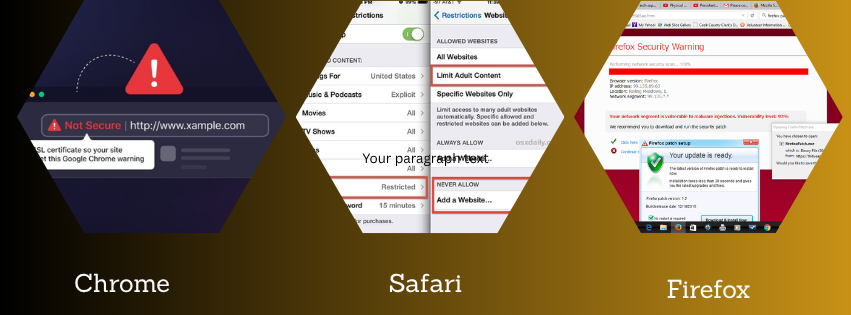
Chrome, Safari, Firefox—every major browser displays aggressive warnings on non-HTTPS sites.
Chrome shows “Not Secure” in red letters. Safari blocks the site by default in some configurations. Firefox displays full-page warnings.
Your potential customers see these warnings before seeing your content. And 84% of users abandon websites that show security warnings.
Think about your customer’s journey. They search for your service, click your link, and immediately see a security warning. What do they do?
They click back and choose your competitor.
Payment Processors Will Cut You Off
This one’s non-negotiable. Every payment gateway operating in UAE requires TLS implementation.
Stripe’s terms explicitly require HTTPS. PayPal won’t process payments on non-secure sites. Telr, Network International, Checkout.com—they all mandate encryption.
Already have SSL but let it expire? Your payment processing stops within 24-48 hours of expiration.
For e-commerce businesses, this means zero revenue. For service businesses with online booking, it means manual payment collection only.
In 2025, that’s a death sentence for growth.
How TLS Creates Instant Customer Trust in UAE Markets
There’s psychology at play here. Security indicators trigger immediate trust responses.
UAE consumers are remarkably security-conscious. Years of banking app usage and cybersecurity awareness campaigns trained them to look for security signals.
The Psychology Behind the Padlock Icon
Consumer behavior research shows fascinating patterns. People make trust decisions in under 3 seconds.
That padlock icon says professional, legitimate, safe without words. It’s a universal trust signal that transcends language and culture.
In UAE’s multicultural marketplace, visual trust signals matter enormously. Your customers might speak English, Arabic, Hindi, Tagalog, or Urdu—but everyone understands that green padlock.
Mobile commerce in Dubai is massive. Emirates NBD reports that 78% of banking transactions happen via mobile apps. Your customers expect bank-level security everywhere now.
TLS compliance isn’t about legal requirements. It’s about meeting customer expectations shaped by their banking apps.
Your Competitive Advantage in Dubai’s Crowded Market
Your competitors are securing their websites. The smart ones already did.
When customers compare two similar businesses, security becomes a silent differentiator. One shows “Secure,” the other shows “Not Secure.”
At Truehost Cloud, we’ve tracked conversion rate improvements after SSL implementation. The average increase? 20-30% across all business types.
That’s not theoretical. That’s real revenue improvement from one technical change.
The SEO Benefits
HTTPS is a confirmed Google ranking factor. Not a huge one individually, but it compounds with other factors.
The direct ranking boost is modest. But the indirect benefits are substantial:
- Lower bounce rates (no security warnings)
- Better user engagement (visitors stay longer)
- Higher click-through rates (no red warnings in search results)
- Improved mobile rankings (mobile-first indexing prioritizes security)
For competitive industries in UAE—real estate, legal services, financial consulting—these factors determine who dominates page 1.
Choosing the Right SSL Certificate for Your UAE Business
Not all SSL certificates serve the same purpose. Different business types need different validation levels.
The TLS implementation you choose affects both your security posture and customer perception.
Domain Validated (DV) Certificates: The Starting Point
DV certificates verify you own the domain. That’s their only job.
They’re fast—usually issued within minutes. They’re affordable, starting around AED 100-150 annually.
Perfect for:
- Business blogs and informational sites
- Portfolio websites
- Small service businesses just starting out
- Landing pages and marketing sites
The trust level is basic. Visitors see the padlock, but there’s no business verification.
Organization Validated (OV) Certificates: The Professional Standard
OV certificates verify your business actually exists. The Certificate Authority checks your registration, business address, and legal status.
Takes 1-3 business days for approval. Costs range from AED 300-800 annually.
Ideal for:
- Established corporate websites
- Professional services (law firms, consultancies)
- Medium-sized businesses with steady online presence
- B2B companies where trust matters
The trust level is significantly higher. Your business information appears in the certificate details.
Extended Validation (EV) Certificates: Maximum Trust Signal
EV certificates undergo rigorous verification. The Certificate Authority verifies your legal existence, physical presence, and operational status.
The approval process takes 5-7 business days. Annual costs run AED 1,000-3,000.
Essential for:
- E-commerce platforms processing significant volume
- Financial services and payment processors
- Healthcare providers handling sensitive data
- High-value B2B services
Major UAE banks use EV certificates. Leading e-commerce platforms use them. If you’re asking customers for payment information, EV makes business sense.
Special Certificates for Complex Setups
Running multiple subdomains? Wildcard certificates cover unlimited subdomains under one domain.
Managing several separate domains? Multi-domain (SAN) certificates handle multiple distinct websites.
Here’s how they compare:
| Certificate Type | Validation | Issue Time | Best For | Price Range (AED) |
|---|---|---|---|---|
| DV (Domain Validated) | Domain only | Minutes | Blogs, basic sites | 100-300 |
| OV (Organization Validated) | Business verified | 1-3 days | Corporate sites | 300-800 |
| EV (Extended Validation) | Full verification | 5-7 days | E-commerce, finance | 1,000-3,000 |
| Wildcard | Varies | Varies | Multiple subdomains | 500-2,000 |
| Multi-Domain | Varies | Varies | Multiple domains | 800-2,500 |
Getting Your SSL Certificate: The Step-by-Step Process
You don’t need technical expertise for this. But you do need to follow the process methodically.
Mistakes cause delays. And delays mean operating without TLS protection while competitors pull ahead.
1) Choose Your Certificate Provider
Several reputable Certificate Authorities serve UAE businesses. Sectigo, DigiCert, and GlobalSign are internationally recognized.
Local providers like du and Etisalat offer SSL services. They understand UAE business documentation and timelines.
Truehost Cloud provides SSL certificates configured specifically for UAE businesses. We handle technical implementation, so you focus on business operations.
Price matters, but support matters more. When your certificate has issues at 11 PM before a big launch, responsive support is priceless.
2) Prepare Your Business Documentation
You’ll need your trade license for organization-validated certificates. Keep digital copies accessible.
For OV and EV certificates, gather:
- Business registration certificate
- Trade license (DED, free zone, or mainland)
- Articles of association
- Bank statements showing company name
- Authorized signatory documentation
Having everything ready accelerates approval. Certificate Authorities work business hours only, so missing documents add days.
3) Technical Implementation
Your hosting provider handles the technical heavy lifting. That’s literally their job.
They generate a Certificate Signing Request (CSR). Sounds complicated—it’s just a file with your business information encrypted.
Shared hosting with providers like SiteGround, HostGator, or local UAE hosts? They offer one-click SSL installation.
VPS or dedicated server? Your hosting support team installs it. Takes 15-30 minutes once you have the certificate file.
4) Migrate from HTTP to HTTPS Properly
This step separates successful implementations from failed ones. You can’t just install SSL and assume it works.
You need 301 redirects. Every old HTTP URL must automatically redirect to the new HTTPS version.
Update internal links throughout your site. Check images, stylesheets, JavaScript files, and embedded content. Mixed content warnings destroy the whole point of SSL.
Notify Google about the change through Search Console. Submit an updated sitemap. Update your robots.txt file if necessary.
Update everywhere your website appears:
- Social media profiles (LinkedIn, Instagram, Facebook)
- Google My Business listing
- Email signatures
- Business cards and marketing materials
- Online directories and review sites
- Partner websites linking to you
5) Test Everything Thoroughly
SSL Labs offers free testing that grades your configuration from A+ to F. You want A or A+ ratings.
Test on multiple browsers: Chrome, Safari, Firefox, Edge. Test on mobile devices. iOS and Android sometimes show different security warnings.
Click through your entire website. Fill out forms. Complete test transactions if you run e-commerce. Check your checkout process end-to-end.
Use browser developer tools to check for mixed content warnings. Fix every single one.
6) Set Up Renewal Monitoring
SSL certificates expire. Standard certificates last one year now (two-year certificates are being phased out).
Expiration means your site reverts to “Not Secure” status. Your TLS protection disappears overnight.
Set calendar reminders 30 and 60 days before expiration. Better yet, enable auto-renewal if your provider supports it.
Truehost Cloud includes automatic renewal monitoring. We notify you before expiration and can handle renewals automatically so you never lose protection.
FAQs
People ask us identical questions constantly. Let’s address them directly.
i) Do I really need SSL if I’m not selling anything online?
Yes, probably. Do you have a contact form? Email signup? Job applications? Any of these constitute data collection requiring encryption.
UAE’s Data Protection Law broadly defines personal data. Even collecting names and email addresses creates legal obligations. TLS helps meet those obligations.
Google penalizes non-HTTPS sites regardless of whether you sell products. Your search rankings suffer either way.
ii) What happens if I just ignore SSL entirely?
Your search rankings decline gradually. Google’s algorithm deprioritizes non-HTTPS sites.
Potential customers see security warnings and leave. Your bounce rate increases, further hurting rankings.
Payment processors won’t work with you. If you ever want to accept online payments, you’ll need SSL first.
Your competitors outrank you. They capture the customers who would have been yours.
iii) How long does getting SSL take in UAE?
DV certificates: minutes to a few hours. OV certificates: 1-3 business days. EV certificates: 5-7 business days.
Add installation and testing time. Budget a full week from start to finish for a proper implementation.
Rushing creates mistakes. Mistakes require fixing. Fixing takes more time than doing it correctly initially.
iv) Can I install SSL myself without technical help?
Depends on your setup and comfort level. One-click installation through cPanel or hosting control panels is genuinely straightforward.
Server configuration, certificate chain setup, and troubleshooting? That’s where professional help prevents headaches.
Making mistakes can temporarily break your website. For business-critical sites, professional installation is worth the cost.
v) Will SSL slow down my website?
Modern SSL adds milliseconds—completely imperceptible to users. Google’s research shows that HTTPS can actually improve speed when combined with HTTP/2.
Your hosting quality affects speed far more than SSL ever will. Slow hosting with SSL is still slow. Fast hosting with SSL is still fast.
vi) How do I know if my SSL is working correctly?
Look for the padlock in your browser’s address bar. Click it to view certificate details.
Visit SSL Labs’ free testing tool. It provides comprehensive analysis and grades your configuration.
Browse your own website. Check for mixed content warnings in your browser’s developer console.
Test on multiple devices and browsers. What works on desktop Chrome might show warnings on mobile Safari.
vii) What’s actually better: free SSL or paid SSL?
For basic websites and blogs, free SSL from Let’s Encrypt works perfectly. The encryption is identical to paid certificates.
Paid certificates offer:
- Business validation (OV and EV)
- Warranty coverage (if something goes wrong)
- Better support when issues arise
- Longer validity periods (less frequent renewal)
For e-commerce or professional services, paid OV or EV certificates provide higher trust signals that can improve conversion rates.
Secure Your UAE Business Today
SSL protection isn’t about checking boxes. It’s about building a business that thrives in Dubai’s digital economy.
The threat landscape evolves constantly. Cyberattacks targeting UAE businesses increase every year. The UAE Cybersecurity Council reports increasingly sophisticated attacks on small and medium businesses.
Your SSL certificate is your first defense layer. It’s also your signal to customers that you’re professional, modern, and trustworthy.
Don’t wait for a security incident to force actionor Google to tank your rankings. Don’t wait for customers to complain about warnings.
Start today. Your business deserves protection. Your customers deserve security. You deserve peace of mind knowing you’re fully protected with TLS encryption.
The future of your UAE business starts with that simple padlock icon. Make it happen this week.