 Domain SearchSecure your perfect UAE domain in seconds.
 Domain TransferSeamless domain transfer. Zero downtime, complete control.
 All TLDsSecure your ideal domain. Explore local UAE and international extensions.
 WHOIS LOOKUPCheck domain ownership, expiry dates, and registrar details instantly.
 AE DomainRegister a .AE domain and build trust in the UAE.
 SSL CertificatesProtect your site with trusted SSL Certificates to secure data and build customer confidence.
 .com DomainGet the world’s most trusted domain and build credibility from day one.
 Web hostingFind budget-friendly hosting that doesn’t compromise on performance.
 Windows HostingHigh-performance hosting for Windows applications and websites.
 Affiliate ProgramBecome a partner and earn commission for every referral.
 WordPress HostingBlazing-Fast WordPress Hosting, Optimised for Performance.
 Email HostingSecure your communications with professional email hosting. Use your domain, stay in control.
 Reseller HostingLaunch your own hosting brand. We handle the tech, you grow your business.
 cPanel HostingHosting supported by cPanel (simple and user-friendly)
 VPS HostingVirtual servers that grow with you. Full root access. Blazing fast performance.
 Managed VPS HostingNot a tech expert? Let us handle everything with our fully managed VPS hosting.
 Dedicated ServersEnjoy full access and total control over your dedicated physical server.
 AI Website BuilderBuild beautiful websites instantly with AI.
 Online ShopCreate a professional online store. No coding needed.
 Web Design ServicesGet a custom website built for your brand and your goals.
 BlogDiscover resources on web hosting, e-commerce, digital marketing, and beyond.
 Contact UsWe are available 24/7 via chat or email
 SupportExplore guides and answers for all our services
Your Dubai website is slow. A customer in Abu Dhabi opens your checkout page and waits four full seconds. Most of them leave before the page finishes loading.
Here is the real problem. You are on shared hosting, sharing server resources with dozens of other websites.
When their traffic spikes during Ramadan or White Friday, your website pays the price. Your page load time climbs, and your sales drop.
The ultimate solution? Moving to a VPS hosting plan.
This guide explains how it all works under the hood, what to look for in a UAE provider, and how to pick the right plan for where your business is right now.
What is a VPS?

A virtual private server is a physical server that is divided into multiple virtual units using software. Each unit gets a fixed allocation of CPU cores, RAM, and storage space.
Your neighbors on the same physical machine cannot touch your resources, and their traffic spikes do not affect your performance.
Shared hosting, by comparison, is more like a student dormitory. Everyone sleeps in the same room and shares the same resources.
When one person uses more than their share, everyone else suffers. That is exactly what happens to your site during peak shopping seasons on a shared server.
A dedicated server is the opposite end of the scale. You rent the entire building. You get all the resources, all the control, and all the monthly cost. For most UAE businesses, that level of expense simply is not justified.
A VPS sits squarely between those two options. You get private, isolated resources without paying for an entire physical machine.
For most UAE businesses receiving more than 10,000 monthly visitors, a VPS makes far more sense than staying on shared hosting.
The Technology Stack That Powers a VPS
1) The Physical Server Layer
Every VPS starts with real, physical hardware sitting inside a data center. There is an actual machine with CPU cores, RAM sticks, and storage drives.
The quality of that hardware sets the ceiling on everything your VPS can deliver.
Leading UAE data centers use processors like Intel Xeon Scalable chips running at 3.1 GHz or higher.
Many facilities use NVMe SSDs, which deliver significantly higher read and write speeds than older SATA SSDs.
These hardware choices directly affect how quickly your website responds to visitors.
2) The Hypervisor: The Layer That Makes the Division Possible
The hypervisor is the software that sits between the physical hardware and your virtual server. It divides the physical machine’s resources into separate virtual environments.
Each VPS gets a fixed allocation of CPU, RAM, and disk. The hypervisor enforces those boundaries, so no single VPS can consume resources that belong to another.
There are two main hypervisor types. A Type 1 hypervisor runs directly on the physical hardware, with no host operating system underneath it. A Type 2 hypervisor runs on top of a host OS.
Type 1 is the standard in professional UAE hosting environments. It is faster, more reliable, and adds less overhead between the hardware and your virtual machine.
The two hypervisor technologies you will encounter most often in UAE hosting are KVM and OpenVZ.
The difference between them has real consequences for what you can run on your server, how isolated your data is, and whether your setup can meet UAE compliance requirements.
3) KVM vs OpenVZ: What UAE Buyers Need to Know
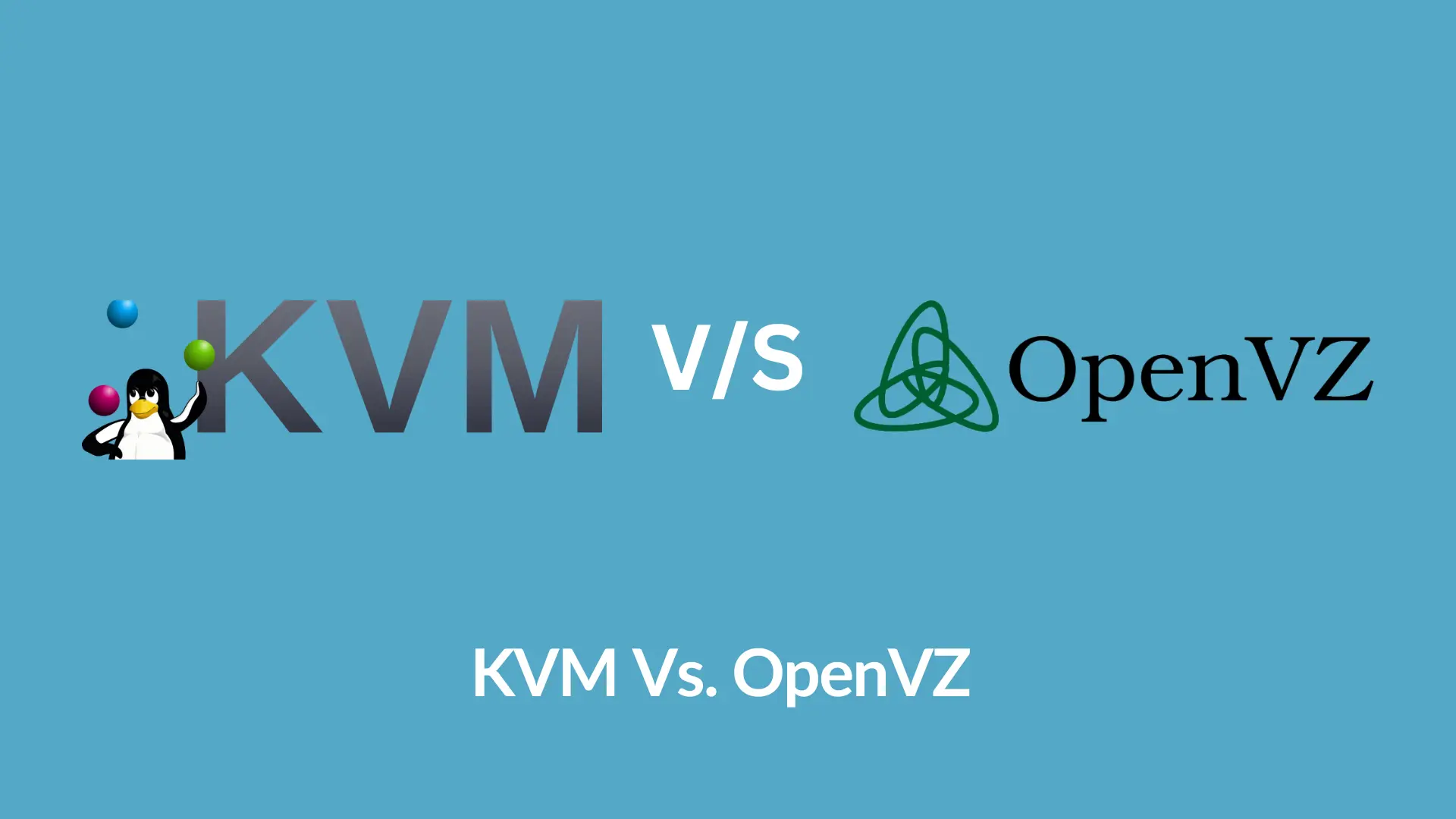
KVM vs OpenVZ: Side-by-Side Comparison
| Feature | KVM | OpenVZ |
|---|---|---|
| OS Kernel | Dedicated per VPS | Shared across all VPS |
| Isolation Level | Full hardware isolation | Partial (OS-level only) |
| Docker Support | Yes, fully supported | Limited or unavailable |
| Custom Kernels | Yes | No |
| Resource Guarantee | Hard limits enforced | Soft limits (can vary) |
| Typical Cost (AED/mo) | AED 60-300 | AED 30-120 |
| Best For | Production, PDPL workloads | Dev environments, budget sites |
KVM (Kernel-based Virtual Machine) gives each VPS its own full operating system kernel.
Your virtual server runs completely independently from every other VPS on the same physical machine.
You can install any operating system, run Docker containers, use custom kernels, and configure the environment exactly the way you need it.
OpenVZ uses a shared kernel. All VPS instances on the same physical host share the same underlying Linux kernel.
This makes OpenVZ cheaper, as the host can fit more VPS instances on a single machine. The trade-off is weaker isolation and more restrictions on what software you can run.
How a UAE VPS Handles Your Traffic
Here is what happens the moment a visitor opens your website. Their device sends a DNS request, which resolves to your VPS IP address.
The request travels to your UAE data center. The hypervisor routes it to your virtual machine.
Your OS processes the request, your server software generates a response, and the page travels back to the visitor.
Your allocated resources stay constant regardless of what other tenants on the same physical machine are doing.
If your plan says 4 vCPU and 8GB RAM, those resources belong to your VPS. This is resource isolation, and it is the single most important technical advantage a VPS holds over shared hosting.
Managed vs Unmanaged VPS: The Honest Comparison
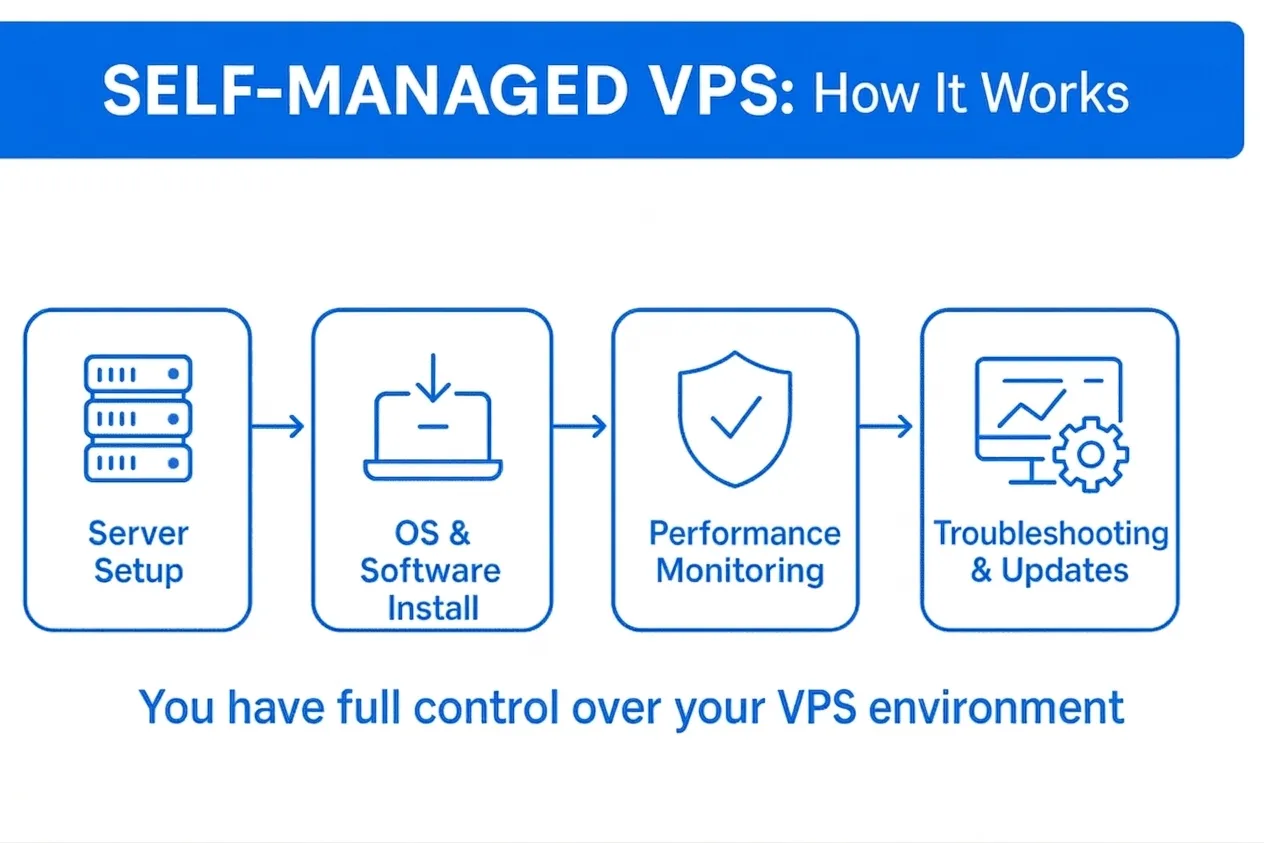
A managed VPS means your provider handles the infrastructure layer for you.
They manage OS updates, security patching, firewall configuration, backup scheduling, and server uptime monitoring.
The hosting provider will typically help with migrations and recover the server after a hardware failure.
They will not touch your application code, CMS plugins, database query performance, or WordPress theme files. That layer of work stays with you.
An unmanaged VPS gives you root access to a fresh server. Everything after that is your responsibility.
You configure the firewall, install the software stack, schedule your own backups, and respond to incidents whenever they occur.
VPS Hosting and UAE Law

The UAE does not operate under a single data protection framework. Three separate legal zones run in parallel, and your business almost certainly falls under at least one of them.
The mainland UAE is subject to the federal Personal Data Protection Law (PDPL), known as Federal Decree-Law No. 45 of 2021.
This law covers every business that processes personal data belonging to UAE residents, regardless of where the business or its servers are physically located.
Businesses registered in the Dubai International Financial Center (DIFC) are subject to the DIFC Data Protection Law No. 5 of 2020. This framework aligns closely with GDPR standards.
The Abu Dhabi Global Market (ADGM) follows the ADGM Data Protection Regulations 2021, which carry similar requirements. Sector-specific rules add another layer.
Healthcare businesses under the DHA, DOH, or MOHAP face strict limits on health data transfers. Telecoms operators must follow TDRA data localization rules.
Frequently Asked Questions
Does a UAE VPS guarantee PDPL compliance?
A UAE-based VPS significantly reduces your cross-border transfer risk and satisfies data residency requirements. Compliance also depends on your application-level security practices and whether you have a signed Data Processing Agreement with your provider. A local UAE server is the right starting point, not the complete answer.
What is the difference between KVM and OpenVZ for UAE hosting?
KVM provides each VPS with its own dedicated OS kernel, with full isolation, Docker support, custom software, and hard resource limits enforced by the hypervisor.
OpenVZ uses a shared kernel across all VPS instances on the same machine. It costs less but limits your software choices and provides weaker isolation. For production workloads and PDPL-relevant applications, KVM is the safer choice.
How much does a UAE VPS cost in 2026?
Entry-level plans start at around AED 30-60 per month for 1 vCPU and 1GB of RAM on NVMe storage. Mid-range plans with 4 vCPU and 8GB RAM typically run AED 150 to 300 per month on an unmanaged plan. Managed plans add a premium of roughly 50-100% over the equivalent unmanaged spec.
Is a Dubai data center faster than a European one for UAE users?
Yes, significantly. A server in Dubai or Abu Dhabi delivers sub-5ms latency to users within the UAE. A European server typically adds 80-120ms of round-trip time. That difference is barely noticeable on a simple landing page, but it is very visible on a checkout page, a search results page, or any page that queries a database.
What is the PDPL compliance deadline for UAE businesses?
Full compliance with Federal Decree-Law No. 45 of 2021 is required by January 1, 2027. Businesses still handling UAE resident data on foreign shared hosting carry an active legal risk right now.
Get The Best VPS Hosting for Your Website Today
By now, you have a clear picture of what a VPS actually does under the hood.
You know how the hypervisor divides a physical machine, why KVM isolation matters for PDPL compliance, and what to check before signing with any provider.
The decision itself is not complicated. If your site is slow, your traffic is growing, or you collect any form of customer data, shared hosting is holding you back.
A UAE-based VPS fixes all three problems at once. It gives you isolated resources, a local data center address, and a far cleaner path to the January 2027 compliance deadline.
The one thing left to figure out is who to trust with your server.
Head over to truehost to see the current UAE VPS plans and get your server live today.