 Domain SearchSecure your perfect UAE domain in seconds.
 Domain TransferSeamless domain transfer. Zero downtime, complete control.
 All TLDsSecure your ideal domain. Explore local UAE and international extensions.
 WHOIS LOOKUPCheck domain ownership, expiry dates, and registrar details instantly.
 AE DomainRegister a .AE domain and build trust in the UAE.
 SSL CertificatesProtect your site with trusted SSL Certificates to secure data and build customer confidence.
 .com DomainGet the world’s most trusted domain and build credibility from day one.
 Web hostingFind budget-friendly hosting that doesn’t compromise on performance.
 Windows HostingHigh-performance hosting for Windows applications and websites.
 Affiliate ProgramBecome a partner and earn commission for every referral.
 WordPress HostingBlazing-Fast WordPress Hosting, Optimised for Performance.
 Email HostingSecure your communications with professional email hosting. Use your domain, stay in control.
 Reseller HostingLaunch your own hosting brand. We handle the tech, you grow your business.
 cPanel HostingHosting supported by cPanel (simple and user-friendly)
 VPS HostingVirtual servers that grow with you. Full root access. Blazing fast performance.
 Managed VPS HostingNot a tech expert? Let us handle everything with our fully managed VPS hosting.
 Dedicated ServersEnjoy full access and total control over your dedicated physical server.
 AI Website BuilderBuild beautiful websites instantly with AI.
 Online ShopCreate a professional online store. No coding needed.
 Web Design ServicesGet a custom website built for your brand and your goals.
 BlogDiscover resources on web hosting, e-commerce, digital marketing, and beyond.
 Contact UsWe are available 24/7 via chat or email
 SupportExplore guides and answers for all our services

What is DNS, and why should you care about this invisible internet infrastructure that powers your daily online activities?
Whether you’re a student researching for assignments, a blogger building your online presence, or a professional writer managing multiple websites, understanding DNS is like learning the secret language of the internet.
Before we dive deeper, let’s address something important. If you’re looking for reliable DNS management tools that perform exceptionally well across global regions, TrueHost Cloud offers enterprise-grade DNS solutions that ensure your websites load lightning-fast worldwide.
For instance, through their client or cPanel interface, you can add, edit, or delete common DNS record types: A, CNAME, MX, TXT, NS.
Now, let’s explore what makes DNS tick.
What is DNS and Why Does It Matter Globally?
DNS stands for Domain Name System, but honestly, that technical definition doesn’t tell you much.
Think of DNS as the internet’s phonebook. The exception is this phonebook works across every corner of the globe, translating website names into the numerical addresses computers actually understand.
You know what happens when you type “google.com” into your browser? Your computer doesn’t magically know where Google lives on the internet.
Instead, it asks the DNS system, which quickly responds with something like “172.217.3.110.” This is the actual address where Google’s servers are located.
Here’s the fascinating part: this process happens millions of times per second across global networks. Every click, every search, every social media scroll triggers a DNS lookup somewhere in the world.
How DNS Works
Let me explain how DNS actually works because it’s pretty clever. When you request a website, your query travels through several layers of DNS servers scattered across different continents.
The DNS Resolution Journey
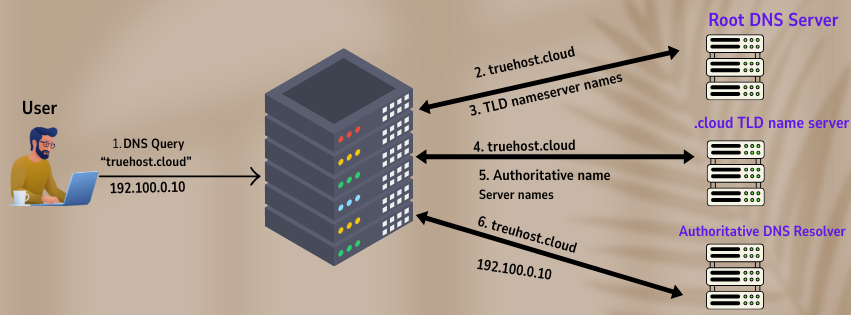
- Local Check First, your device checks its local memory (called cache) to see if it already knows the IP address.
- ISP Resolver If not, your request goes to your Internet Service Provider’s DNS resolver, think of this as your local post office.
- Root Server Contact Your ISP’s resolver then contacts a root name server. There are only 13 root server systems worldwide, but they’re mirrored across hundreds of locations globally.
- TLD Server Next comes the Top-Level Domain (TLD) server, which handles extensions like .com, .org, or country-specific ones like .uk or .de.
Step 5: Authoritative Response Finally, the authoritative name server which is the definitive source for that specific domain, provides the actual IP address.
This entire process typically takes less than 100 milliseconds, even when your request bounces between servers on different continents.
Essential DNS Components You Should Know
There are two key components of DNS:
1. DNS Records
DNS records are like different types of instructions stored in the system. Each record type serves a specific purpose:
| Record Type | Purpose | Example |
|---|---|---|
| A Record | Maps domain to IPv4 address | example.com → 192.168.1.1 |
| AAAA Record | Maps domain to IPv6 address | example.com → 2001:db8::1 |
| CNAME Record | Creates domain aliases | www.example.com → example.com |
| MX Record | Specifies mail servers | example.com → mail.example.com |
| TXT Record | Stores text information | SPF, DKIM verification |
2. Global DNS Server Types
Different servers handle different parts of the DNS process:
| Server Type | Function | Global Distribution |
|---|---|---|
| Recursive resolvers | Handle your initial queries | ISP-operated worldwide |
| Root servers | Direct traffic to TLD servers | 13 systems, hundreds of locations |
| TLD servers | Manage top-level domains | Regional clusters globally |
| Authoritative servers | Store actual DNS records | Distributed by domain owners |
Why DNS Performance Matters for Global Websites
Here’s something most people don’t realize, DNS performance directly impacts how fast your website loads for visitors worldwide. A slow DNS response in Tokyo can make your London-based website feel sluggish to Japanese users.
Global DNS networks use a concept called “anycast” routing. This means when someone in Australia queries your website, they’re automatically directed to the closest DNS server. It could maybe one in Sydney rather than one in New York.
The difference can be dramatic. A DNS query that takes 200ms from Sydney to New York might only take 20ms to a local Sydney server. That’s why serious website owners invest in global DNS services.
Common DNS Issues and Global Solutions
1. DNS Propagation
When you change DNS records, the updates don’t happen instantly worldwide. DNS propagation can take anywhere from a few minutes to 48 hours, depending on various factors.
Different regions update at different speeds. Your website might be accessible from New York but still show the old version in Mumbai. This happens because DNS servers cache information for different periods.
2. Regional DNS Blocking and Censorship
Some countries block or redirect certain DNS queries. China’s Great Firewall, for instance, intercepts DNS requests for blocked websites. Users in these regions often switch to alternative DNS providers like Cloudflare (1.1.1.1) or Google (8.8.8.8).
Performance Optimization Strategies
Smart website owners use multiple strategies to optimize DNS performance globally:
- GeoDNS: Directs users to the closest server based on their location
- Load balancing: Distributes traffic across multiple servers
- Redundancy: Multiple DNS providers prevent single points of failure
What is DNS Security and Why It Matters
DNS security has become increasingly important as cyber threats evolve. Traditional DNS queries are sent in plain text, making them vulnerable to interception and manipulation.
Modern DNS Security Solutions
DNS over HTTPS (DoH) encrypts DNS queries, preventing ISPs and malicious actors from seeing which websites you visit. Major browsers like Chrome and Firefox now support DoH by default.
DNS over TLS (DoT) provides similar encryption but uses a different protocol. Both technologies help protect user privacy and prevent DNS hijacking attacks.
DNSSEC adds digital signatures to DNS records, ensuring the responses you receive are authentic and haven’t been tampered with.
Choosing the Right DNS Provider for Global Performance
Not all DNS providers are created equal, especially when you’re targeting global audiences. Here’s what you should look for:
Performance Metrics That Matter
- Response time: How quickly servers respond to queries
- Uptime: Percentage of time servers are available
- Global coverage: Number of server locations worldwide
- Anycast network: Automatic routing to closest servers
Popular Global DNS Providers
While there are many options, some providers stand out for global performance:
- Cloudflare: Operates one of the world’s largest networks
- Amazon Route 53: Integrates well with AWS services
- Google Cloud DNS: Leverages Google’s global infrastructure
For businesses serious about global performance, services like TrueHost Cloud offer enterprise-grade DNS solutions with 99.99% uptime guarantees and servers strategically located across major global regions.
DNS Troubleshooting: When Things Go Wrong
Even the best DNS setups occasionally hiccup. Here’s how to diagnose and fix common issues:
Quick Diagnostic Tools
You can check DNS health using command-line tools:
nslookup example.com
dig example.com
host example.com
Online tools like DNS Checker show how your DNS records appear from different global locations.
Common Problems and Solutions
Website not loading: Usually caused by incorrect A records or DNS propagation delays.
Email delivery issues: Often related to missing or misconfigured MX records.
SSL certificate problems: Can stem from DNS mismatches between your domain and hosting provider.
The Future of DNS
DNS technology continues evolving to meet growing global internet demands. IPv6 adoption is accelerating, requiring more AAAA records. Edge computing is pushing DNS resolution closer to end users.
DNS over QUIC (DoQ) promises even faster, more secure DNS queries. Machine learning is being integrated into DNS systems to predict and preload popular websites.
The Internet of Things (IoT) is creating new DNS challenges. Billions of connected devices worldwide need efficient DNS resolution, driving innovation in edge DNS technologies.
Frequently Asked Questions About DNS
What happens when DNS servers go down globally?
When major DNS providers experience outages, entire portions of the internet become inaccessible. This is why redundancy is so important. Having multiple DNS providers ensures your website stays online even during regional outages.
Can I use different DNS servers for better performance?
Absolutely! You can configure your devices to use faster DNS servers. Popular options include Cloudflare (1.1.1.1), Google (8.8.8.8), and OpenDNS (208.67.222.222).
How does DNS affect my website’s SEO?
DNS performance indirectly affects SEO through page loading speeds. Google considers site speed as a ranking factor, so faster DNS resolution can improve your search rankings.
Is DNS free worldwide?
Basic DNS services are usually included with domain registration and hosting. However, premium services with advanced features, better performance, and global distribution typically cost extra.
What is DNS hijacking and how can I prevent it?
DNS hijacking redirects your traffic to malicious servers. Protect yourself by using secure DNS providers, enabling DNSSEC, and regularly monitoring your DNS settings.
Making DNS Work for Your Global Audience
Understanding what DNS is and how it works globally gives you a significant advantage in managing your online presence. Whether you’re running a personal blog or managing enterprise websites, DNS performance directly impacts your users’ experience.
The key is choosing the right DNS strategy for your needs. For most personal projects, your hosting provider’s DNS works fine. But if you’re targeting global audiences or running mission-critical websites, investing in premium DNS services pays dividends.
TrueHost Cloud helps you in global DNS optimization, ensuring your websites load quickly regardless of where your visitors are located. Our DNS management tools make us suitable for businesses with international audiences.
Remember, DNS is the foundation of your online presence. Getting it right from the start saves you headaches later and keeps your global audience happy. After all, in our interconnected world, every millisecond counts.
Read Also: