 Domain SearchSecure your perfect UAE domain in seconds.
 Domain TransferSeamless domain transfer. Zero downtime, complete control.
 All TLDsSecure your ideal domain. Explore local UAE and international extensions.
 WHOIS LOOKUPCheck domain ownership, expiry dates, and registrar details instantly.
 AE DomainRegister a .AE domain and build trust in the UAE.
 SSL CertificatesProtect your site with trusted SSL Certificates to secure data and build customer confidence.
 .com DomainGet the world’s most trusted domain and build credibility from day one.
 Web hostingFind budget-friendly hosting that doesn’t compromise on performance.
 Windows HostingHigh-performance hosting for Windows applications and websites.
 Affiliate ProgramBecome a partner and earn commission for every referral.
 WordPress HostingBlazing-Fast WordPress Hosting, Optimised for Performance.
 Email HostingSecure your communications with professional email hosting. Use your domain, stay in control.
 Reseller HostingLaunch your own hosting brand. We handle the tech, you grow your business.
 cPanel HostingHosting supported by cPanel (simple and user-friendly)
 VPS HostingVirtual servers that grow with you. Full root access. Blazing fast performance.
 Managed VPS HostingNot a tech expert? Let us handle everything with our fully managed VPS hosting.
 Dedicated ServersEnjoy full access and total control over your dedicated physical server.
 AI Website BuilderBuild beautiful websites instantly with AI.
 Online ShopCreate a professional online store. No coding needed.
 Web Design ServicesGet a custom website built for your brand and your goals.
 BlogDiscover resources on web hosting, e-commerce, digital marketing, and beyond.
 Contact UsWe are available 24/7 via chat or email
 SupportExplore guides and answers for all our services
Your website decides on your brand before your visitor reads a single word.
How? Chrome scans for one small digital file. If it doesn’t find it. The address bar now reads ‘Not Secure.’ That visitor is already gone.
This is not a rare edge case. 93% of all Chrome browsing time already happens on HTTPS pages.
Your visitors arrive expecting encryption, just as they expect your site to load.
An SSL certificate handles that. A Secure Sockets Layer (SSL) sits on your web server and does two things at once.
SSL encrypts the data traveling between your visitor’s browser and your site so that no one can intercept it. And it confirms to the browser that your website is who it claims to be.
When both checks pass, the browser shows a padlock. When they do not, a warning is shown.
The Padlock Your Visitors See Before They Read a Word
Chrome version 68 introduced a change that still shapes UAE websites today.
Any site running on plain HTTP now receives a “Not Secure” flag in the browser. That flag appears before a user reads a single line of your content.
The contrast with an HTTPS site is immediate and visible. A small padlock icon appears in the address bar instead of a warning.
That padlock tells visitors their connection is encrypted and the site is verified.
What an SSL Certificate Actually Does
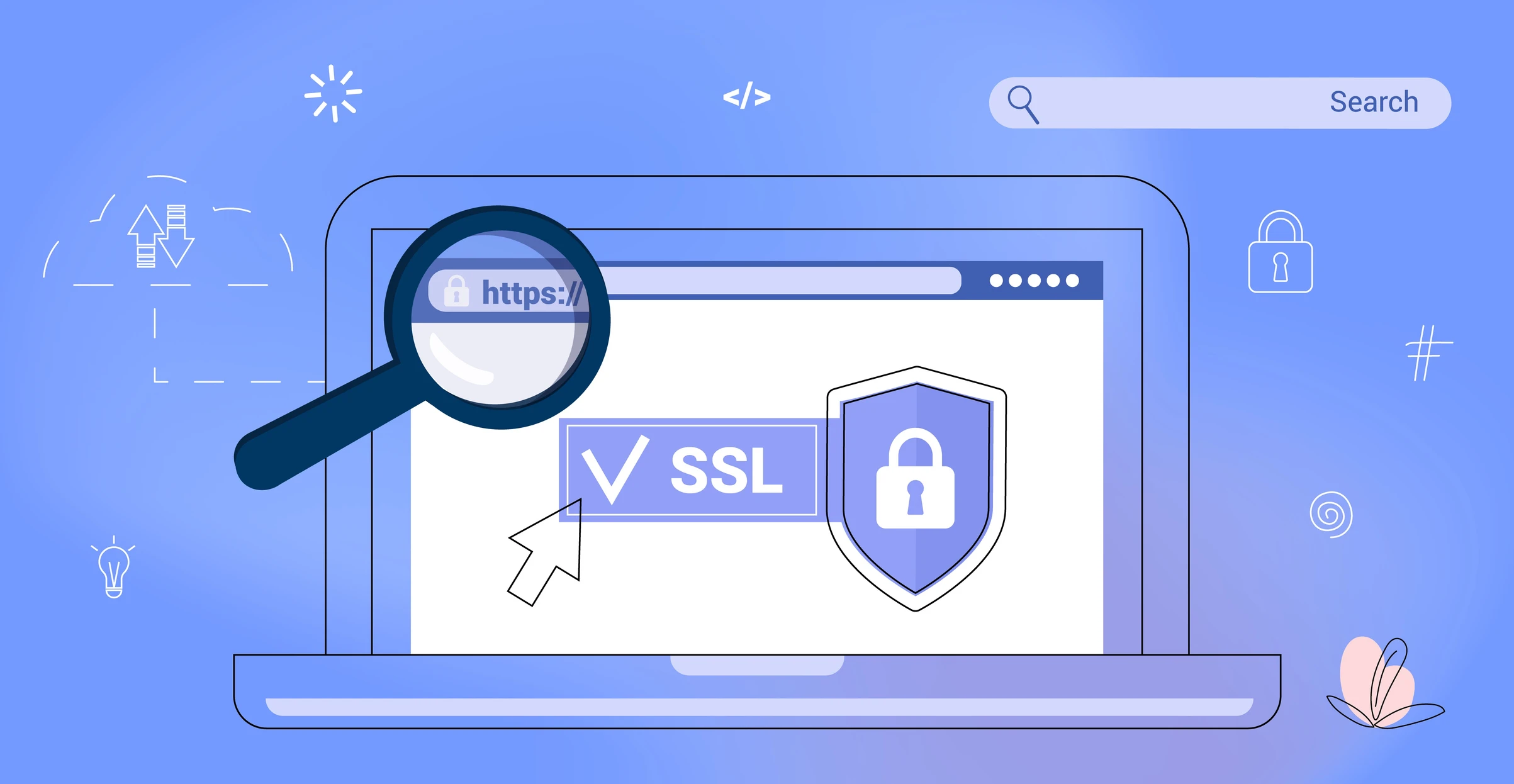
SSL certificates handle encryption and authentication. Let’s take a detailed look at each.
The Encryption Layer
Data travels between a visitor’s browser and your web server in small packets.
Without encryption, those packets are readable to anyone intercepting the connection.
SSL puts that data inside a sealed envelope before it leaves either end. The envelope can only be opened by the intended recipient on the other side.
The process starts with something called an SSL handshake. A visitor’s browser requests a certificate from your server.
The server presents it, and the browser checks it against a trusted Certificate Authority. If everything checks out, a secure session begins, and data flows safely.
One naming note: SSL is the legacy term for this technology.
Transport Layer Security (TLS) 1.3 is the actual protocol running on secure websites today. The industry kept the SSL name even after TLS replaced it.
Authentication: Proving the Website is Real
A site can encrypt its traffic and still appear fraudulent. The authentication piece is what separates a real site from a copycat.
Certificate Authorities (CAs) are organizations that issue and verify SSL certificates.
Names like DigiCert, GlobalSign, and Let’s Encrypt are the most widely recognized.
Just six certificate authorities issue 90% of all SSL certificates worldwide.
The Three Types of SSL Certificates UAE Businesses Need to Know
Not all SSL certificates are the same level of protection. They come in three validation tiers, each serving a different degree of trust.
Choosing the wrong tier creates either unnecessary risk or unnecessary cost.
The table below shows how each type compares for use cases in the UAE.
| Type | Verifies | Issue Time | Best For (UAE) | Compliance Fit |
| DV | Domain only | Minutes | Blogs, info sites | Basic baseline |
| OV | Domain + business | 1-3 days | SMEs, lead gen sites | PDPL technical measures |
| EV | Full org. identity | 1-5 days | Finance, e-commerce | DIFC/ADGM, PCI DSS |
DV (Domain Validation): Fast, Free, and Entry-Level
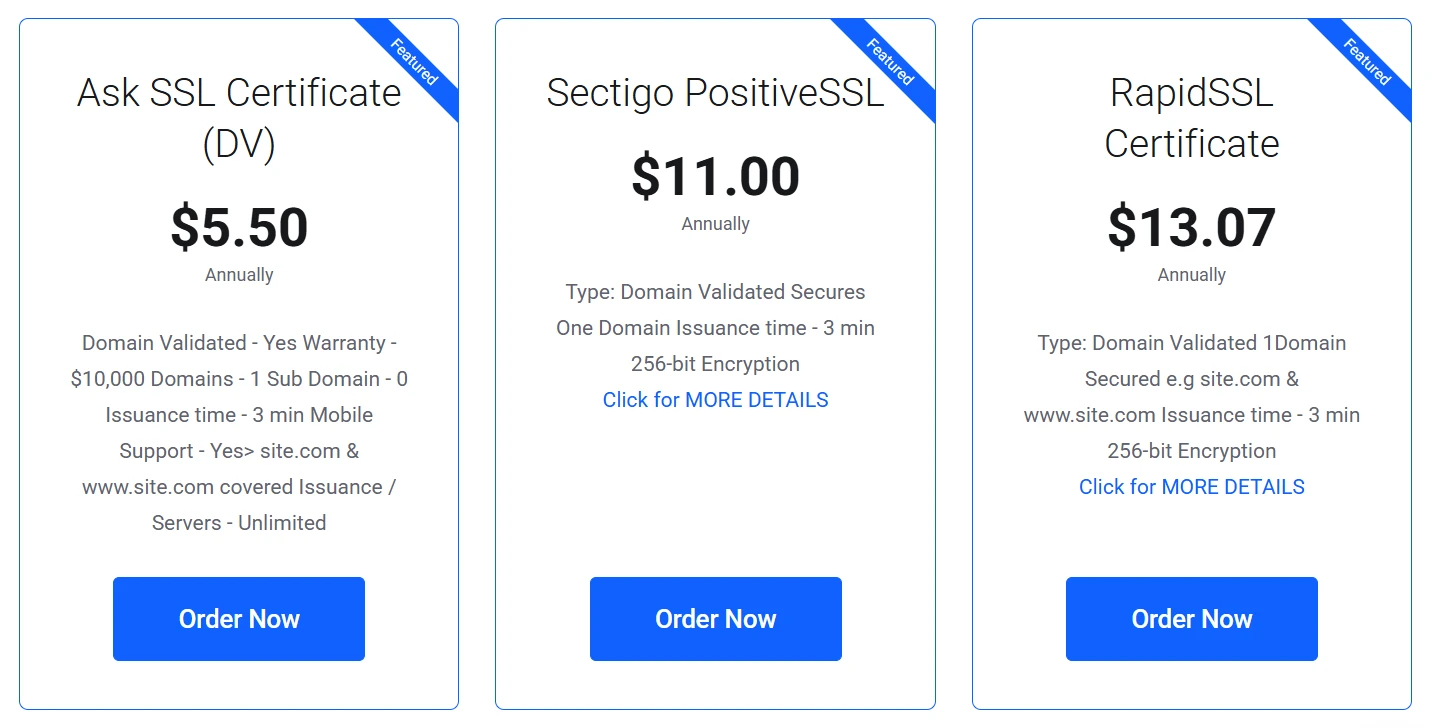
Domain Validation (DV) certificates verify one thing: that you own the domain.
No business identity check happens during the process. Validation is completed via email and usually takes a few minutes.
DV certificates make up 94.3% of all SSL certificates issued globally.
Most of that volume is driven by free providers like Let’s Encrypt. For a blog, informational website, or portfolio page, DV is perfectly adequate.
OV (Organization Validation): The Right Choice for Most UAE Businesses
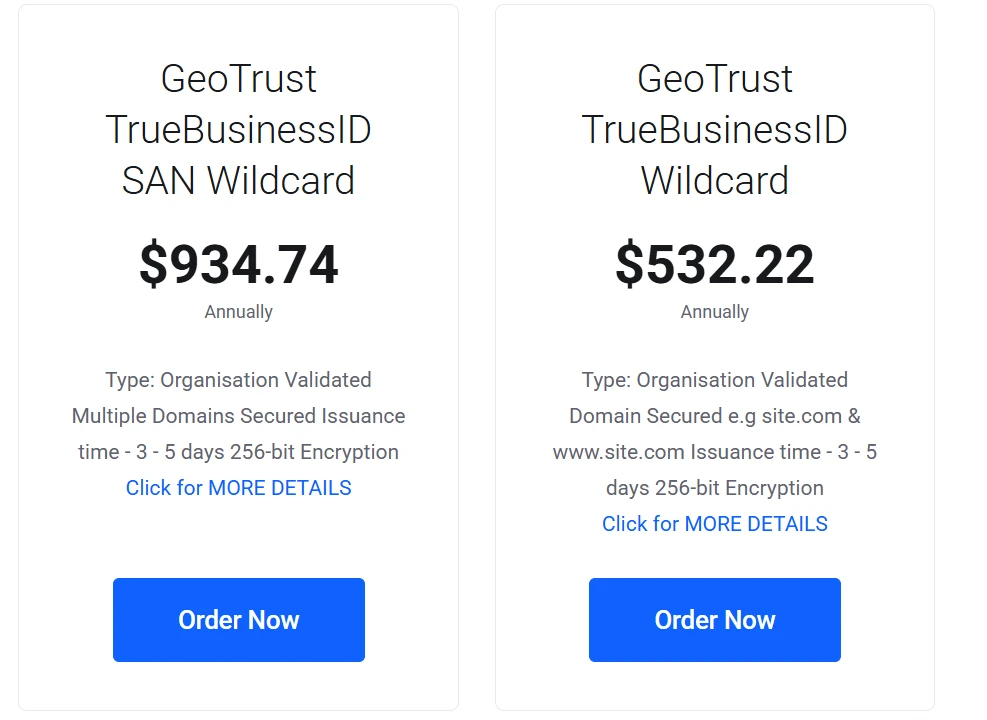
Organization Validation (OV) certificates go one step further than DV. They verify both domain ownership and the legal existence of your business.
Company registration documents are required for the application process.
For most UAE businesses with a customer-facing website, OV is the right starting point. This applies to any site collecting contact forms, newsletter signups, or account logins.
UAE Federal Decree-Law No. 45 of 2021, known as the PDPL, has clear expectations. Controllers must implement appropriate technical security measures for the personal data they handle.
OV certificates are a direct way to meet that technical obligation in practice.
EV (Extended Validation): High-Trust for Finance and E-Commerce
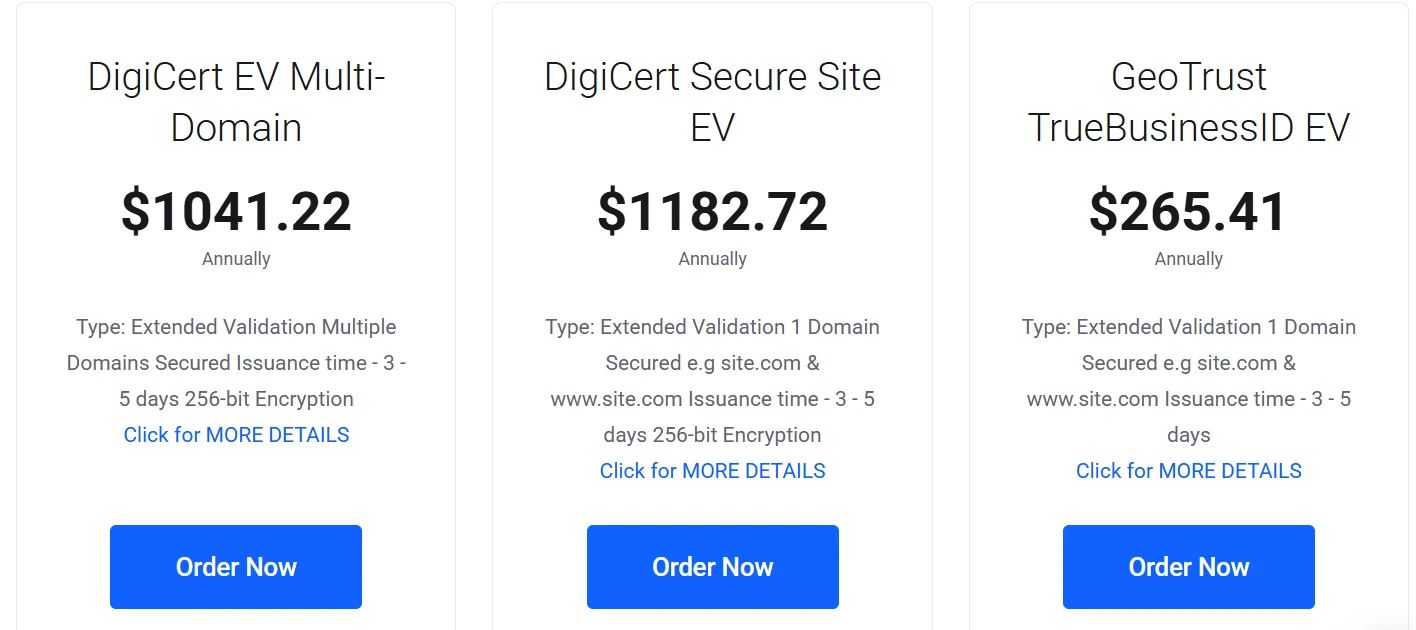
Extended Validation (EV) certificates sit at the top of the SSL trust hierarchy.
They require legal, physical, and operational verification of your full organization. The process takes longer, but it produces the highest available certificate trust level.
For UAE businesses operating in ADGM or DIFC, the case for EV is strong.
EV certificates are a common component of satisfying those security requirements.
E-commerce platforms processing card payments should also treat EV as a minimum standard.
Why SSL Certificates Matter Specifically for UAE Websites
1) UAE Legal Compliance
The UAE’s data protection framework is more layered than many businesses realize.
Three separate regulatory regimes apply depending on where and how you operate.
At the federal level, Decree-Law No. 45 of 2021 forms the primary data protection law.
It requires controllers and processors to implement appropriate technical and organizational measures for the processing of personal data.
SSL encryption for data in transit falls directly within that obligation.
The DIFC Data Protection Law received significant amendments effective July 2025.
Those amendments expanded its scope to all DIFC-incorporated entities operating globally. They also introduced a private right of action for individuals whose data rights are breached.
At that point, SSL becomes a risk management tool, not just a compliance checkbox.
E-commerce sites that accept card payments face another requirement: PCI DSS.
It mandates TLS/SSL encryption as a core component of payment card security.
An expired or missing certificate puts your PCI compliance at immediate risk.
2) Google Rankings and UAE Search Visibility
Google began using HTTPS as a ranking signal back in 2014. Its weight in the algorithm has grown steadily since then.
Two otherwise identical UAE websites will not rank equally in search results. The one running on HTTPS will consistently outrank its HTTP counterpart.
This matters directly for UAE businesses targeting Arabic and English searches.
Google.ae results favor secured pages across every industry and content category. Losing ranking positions to a competitor simply because they have SSL is entirely preventable.
3) Customer Trust and Conversion Rates in the UAE Market
UAE consumers are among the most digitally aware shoppers in the region.
They notice missing security markers before completing a purchase or submitting a form. A “Not Secure” warning on a checkout page is a direct hit to conversions.
On the other hand, visible trust indicators improve purchase completion rates.
SSL seals, padlock icons, and HTTPS together send a clear signal of safety. For UAE e-commerce businesses, that signal translates into measurable revenue.
The Threat SSL Does NOT Protect You From
SSL certificates are frequently misunderstood as a complete security solution. They are not, and that gap in understanding can lead to real harm.
Over 90% of phishing sites in 2023 displayed a valid HTTPS padlock. Cybercriminals now use legitimate SSL certificates by default to appear trustworthy.
The padlock no longer signals “this site is safe to use” on its own. It only means the connection between you and that site is encrypted.
Beyond phishing, SSL does nothing to block SQL injection attacks. It does not stop cross-site scripting, DDoS attacks, or malware delivery either.
A Web Application Firewall (WAF) is the right tool for those specific threats.
How Long Does an SSL Certificate Last?
SSL certificates have a fixed expiry date built in. Once they expire, browsers immediately revoke trust and show warnings to your visitors.
The industry currently caps most certificate validity at 1 year.
For UAE website owners, certificate renewal becomes a recurring operational requirement.
Tools such as the ACME protocol and Certificate Manager automatically renew certificates before expiry.
Free SSL vs. Paid SSL: Which One Does a UAE Website Actually Need?
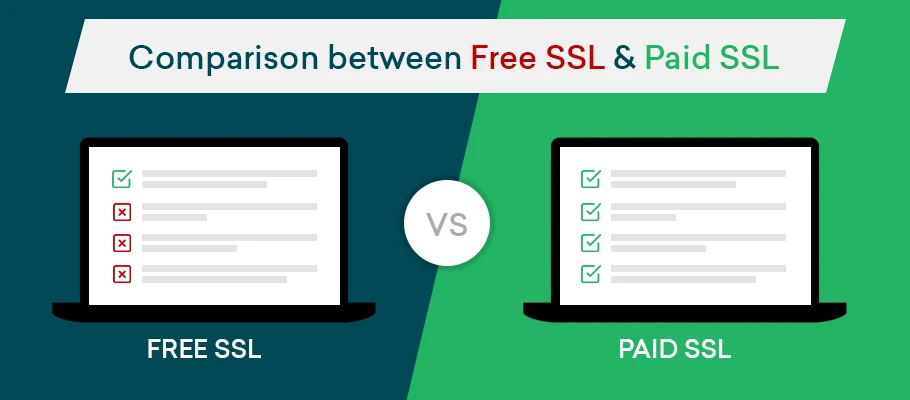
Let’s Encrypt is a free, automated Certificate Authority trusted by all major browsers.
It holds 63.7% of the global SSL certificate authority market share. That adoption rate speaks for itself: it works and is reliable for the right use cases.
Free SSL from Let’s Encrypt suits informational and content-led websites well. Blogs, portfolio pages, and basic company profile sites fall into this category.
If your UAE website does not collect sensitive user data, free SSL is sufficient.
When to Pay for an SSL Certificate in the UAE
Paid SSL becomes necessary the moment your website starts collecting personal data.
Names, phone numbers, emails, payment details, and health records all qualify. For those sites, DV-level protection falls below the expected compliance standard.
Paid OV and EV certificates from providers like DigiCert and GlobalSign start at AED 914 per year. That cost should be weighed against the cost of an insecure checkout page in lost sales.
For UAE businesses in finance, healthcare, or e-commerce, the calculation is clear. One month of conversion losses from a “Not Secure” warning exceeds the cost of a full year of SSL fees.
How to Get an SSL Certificate for Your UAE Website
Getting SSL set up does not require a developer if you follow the right steps. Here is the full process from start to finish.
- Choose your certificate type using the DV, OV, and EV framework above.
- Select a trusted Certificate Authority or a UAE-based reseller with global browser recognition.
- Generate a Certificate Signing Request (CSR) from your server or hosting control panel.
- Complete the validation process matched to your chosen certificate type.
- Install the certificate and configure 301 redirects from HTTP to HTTPS across all pages.
For DV, validation requires only an email confirmation and takes a few minutes.
OV requires company registration documents and takes one to three business days.
EV requires full legal and operational verification, which can take up to 5 days.
For .ae domain holders, many UAE hosting providers bundle a free DV SSL with domain registration.
After installation, run a check using the free Qualys SSL Labs tool. Enter your domain and look for an A or A+ grade in the results.
Conclusion
SSL certificates are not a one-time setup task you cross off a list. They expire, they require the right validation tier, and the rules around them are tightening.
If your site collects no user data, a free DV certificate gets the job done today. On the other hand, if you collect any personal information at all, OV is your starting point.
Finally, if you operate in finance, e-commerce, or under DIFC and ADGM rules, EV is the right call.
Truehost web hosting plans include free SSL certificates, and if you need additional ones, you can check out our store.