 Domain SearchSecure your perfect UAE domain in seconds.
 Domain TransferSeamless domain transfer. Zero downtime, complete control.
 All TLDsSecure your ideal domain. Explore local UAE and international extensions.
 WHOIS LOOKUPCheck domain ownership, expiry dates, and registrar details instantly.
 AE DomainRegister a .AE domain and build trust in the UAE.
 SSL CertificatesProtect your site with trusted SSL Certificates to secure data and build customer confidence.
 .com DomainGet the world’s most trusted domain and build credibility from day one.
 Web hostingFind budget-friendly hosting that doesn’t compromise on performance.
 Windows HostingHigh-performance hosting for Windows applications and websites.
 Affiliate ProgramBecome a partner and earn commission for every referral.
 WordPress HostingBlazing-Fast WordPress Hosting, Optimised for Performance.
 Email HostingSecure your communications with professional email hosting. Use your domain, stay in control.
 Reseller HostingLaunch your own hosting brand. We handle the tech, you grow your business.
 cPanel HostingHosting supported by cPanel (simple and user-friendly)
 VPS HostingVirtual servers that grow with you. Full root access. Blazing fast performance.
 Managed VPS HostingNot a tech expert? Let us handle everything with our fully managed VPS hosting.
 Dedicated ServersEnjoy full access and total control over your dedicated physical server.
 AI Website BuilderBuild beautiful websites instantly with AI.
 Online ShopCreate a professional online store. No coding needed.
 Web Design ServicesGet a custom website built for your brand and your goals.
 BlogDiscover resources on web hosting, e-commerce, digital marketing, and beyond.
 Contact UsWe are available 24/7 via chat or email
 SupportExplore guides and answers for all our services
The United Arab Emirates is one of the most attractive e-commerce markets right now. However, most people struggle with how to start an online store in the UAE.
They end up focusing too much on the minor marketing details and forget the core fundamentals, such as getting the proper licence or even registering a .ae domain.
This guide covers everything you need to know to launch a successful online store in the UAE.
Why You Should Launch an Online Store in the UAE
The UAE ecommerce market is growing at a healthy pace. Total revenue is expected to exceed $9 billion by 2026.
The growth is expected to continue, driven by the UAE Digital Economy Strategy. This aims to double the digital economy’s contribution to GDP by 2032.
Three structural advantages make the UAE stand apart from other markets:
A) Near-zero income tax for individuals and most SMEs.
B) The internet penetration rate is above 99%, and more than 70% of all sales journeys begin on the internet.
C) world-class logistics infrastructure through Jebel Ali and Dubai CommerCity supports fast, reliable delivery.
Steps to Take When Starting an E-commerce Store in the UAE
1) Choose Your Business Structure
Before you register a domain or pick a theme, sort out your business structure first. This decision affects what you can sell, where you can sell it, and how you accept payments.
Mainland vs. Free Zone: What Actually Matters for Your Store
With recent legal amendments, it’s now possible for an ecommerce to operate under an LLC structure within the mainland.
A free zone license gives you 100% foreign ownership and no customs duties within zone boundaries. If you are selling directly to mainland customers, you will pay 5% customs duty on the CIF value.
Some free zones require a dual license arrangement for full mainland access. Verify this with a business setup advisor before you sign anything.
| Free Zone | Entry License Price (AED) | Key Advantage |
|---|---|---|
| SPC Free Zone | From 5,750 | Lowest entry cost available |
| Meydan Free Zone | From 12,500 | Amazon.ae and Noon direct access |
| IFZA | From 11,900 | Flexible activity lists |
| RAKEZ | From 10,500 | Warehouse and logistics options |
| SHAMS | From 10,000 | Strong for media and digital sellers |
Meydan Free Zone stands out for ecommerce sellers specifically. Their Fawri fast-track license costs AED 15,000 and is issued in under 60 minutes. They also provide direct integration support for Amazon.ae and Noon.com listings.
2) Get Your e-Commerce License
A mainland license is issued through the Department of Economic Development (DED). It lets you sell directly to UAE consumers anywhere in the country.
DED e-Trader (Rukhsat Tajer) licences are designed for individuals and businesses owned by UAE and GCC nationals.
Mainland DED e-commerce licenses are designed for LLCs and sole proprietorships. They are available to all nationalities, and they allow 100% foreign ownership.
You will also have to apply for a No Objection Certificate (NOC) from the Telecommunications and Digital Government Regulatory Authority (TDRA). This allows you to conduct e-commerce activities in the mainland UAE.
Register for VAT
Most new store owners ignore value-added tax (VAT) until it becomes a compliance problem. Do not make that mistake.
Once your annual revenue crosses AED 375,000, VAT registration with the Federal Tax Authority is mandatory.
Configure your Shopify or WooCommerce backend for VAT on day one. Retrofitting tax settings after launch creates serious accounting headaches. Build it in correctly from the start.
3) Open a Corporate Bank Account
Your payment gateway setup depends entirely on having an active corporate bank account. Without one, you cannot receive payouts from any gateway. Sort this before touching your platform.
Compare at least two options before committing. Look at minimum balances, monthly fees, international transfer costs, and support response times.
4) Register Your Domain and Choose Your E-commerce Platform
When selling products and services to the UAE audience, you should register a .ae domain.
This builds trust with local buyers faster than a .com. It also signals to search engines that your store serves the UAE market.
Choose an e-Commerce Platform
Your platform choice affects everything: fees, gateway options, language support, and logistics integrations.
Here is how the three main options compare for UAE-based sellers in 2026.
Shopify is the most beginner-friendly option available. It supports AED currency natively. It integrates with regional logistics providers, including Aramex, Fetchr, Quiqup, and DHL.
The main limitation: Shopify Payments is unavailable in the UAE. You need a third-party gateway from day one.
WooCommerce gives you more control over your store infrastructure. It runs on WordPress and requires self-managed hosting. Its plugin options for UAE payment gateways are solid.
The main limitation: You have to manage more technical maintenance over time.
Magento suits large-scale operations with complex, multi-category product catalogs. Most established UAE retail brands use Magento for its scalability.
The main limitation: Setup costs are higher, and implementation requires technical expertise.
Implement Arabic Localization
Over 54% of internet users in the UAE shop online regularly. A large segment prefers Arabic at checkout. An English-only store loses that audience at the payment step, often without you ever knowing.
Prioritize these pages for Arabic translation first: Landing pages, checkout, FAQs, returns policy, and product descriptions.
5)Build Your Online Store
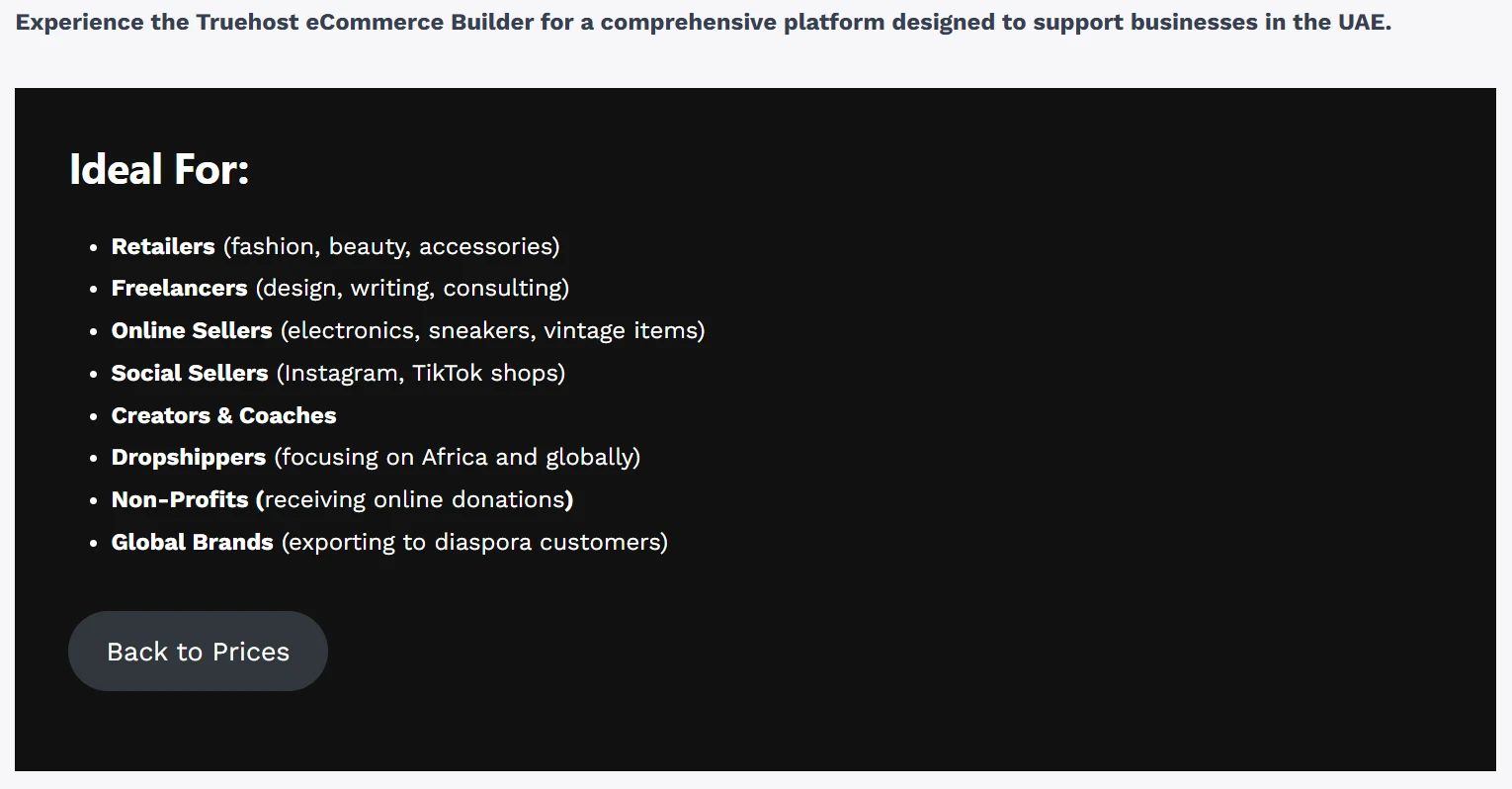
Your store needs more than an online cart. Here is the minimum viable page set for a UAE online store.
- Homepage with clear delivery zones and AED pricing
- About Us page with your trade license number and full contact details
- Product pages with AED pricing, local shipping times, and Arabic descriptions
- Contact page with a WhatsApp chat button (UAE buyers expect this)
- Shipping and returns policy written for the UAE consumer protection law
- Privacy policy compliant with UAE data protection requirements
Add trust signals specific to the UAE market. The eTajer mark from Abu Dhabi, payment gateway logos, and Arabic return terms all increase buyer confidence.
Payment Gateway Configuration
Your store has no functioning checkout until you connect a third-party gateway. The payment gateway requires your trade license and corporate bank account to already be active.
Here is a clear comparison of the most commonly used gateways for UAE-based stores.
| Gateway | Fee Per Transaction | Setup Time | Key Note |
|---|---|---|---|
| Stripe | 2.9% + AED 1.00 | 3-7 days | Free Zone licenses only |
| Telr | Included in AED 349/month | 1-3 days | UAE-native, supports Mada + STC Pay |
| PayTabs | From 2.85% | 1 day | Fast setup, strong fraud protection |
| Tabby | BNPL, no direct merchant fee | 3-5 days | Pay-in-installments option |
| Tamara | BNPL, no direct merchant fee | 3-5 days | Strong UAE and KSA adoption |
Stripe is the cheapest per-transaction option for sellers on a Free Zone license. If you have a mainland license, Telr or PayTabs are the more reliable choices.
The setup process follows the same general flow for all gateways:
A) Register on the provider’s platform.
B) Upload your trade license, Emirates ID, and bank details.
C) Wait for approval.
D) Install the plugin.
E) Test in sandbox mode before going live.
Logistics and Shipping Configuration
Configure your shipping zones before launch. Set accurate delivery timelines for each emirate separately. Shopify and WooCommerce can be integrated with Aramex, Fetchr, Shipa Delivery, and Emirates Post.
One thing to know about UAE buyers: they expect speed. Same-day or next-day delivery is the standard expectation in Dubai and Abu Dhabi.
If your logistics partner cannot meet that standard, state your delivery times clearly up front to avoid negative reviews.
6) Launch and Grow Your Online Store
After launching your online store, your efforts should go towards streamlining the sales journey.
In addition to your standalone online store, you should also launch on marketplaces. This gives you access to buyers who are already in purchase mode.
Selling on marketplaces first builds social proof without requiring any paid traffic investment.
Meydan Free Zone provides direct setup support for listing on Amazon.ae and Noon.com. Their E-Commerce Starter add-on streamlines onboarding across both platforms.
7) Focus on Social Commerce
UAE consumers are highly active on social media. TikTok, Instagram, and live shopping events are reshaping how buyers discover products.
Connect your e-commerce platform with your brand’s social media accounts for direct product tagging. This is where discovery happens for most product categories.
Keep in mind that Ad policies in the UAE are stricter than in many other regions. Your creatives must follow local content guidelines.
WhatsApp Business is also a direct sales channel in the UAE, not just a support inbox. Set up a product catalog inside WhatsApp Business and share it directly with interested buyers from day one.
8) The First 30 Days After Launch: What to Prioritize
Weeks 1 and 2: Focus entirely on organic channels. Activate your WhatsApp Business catalog. Post Reels daily on Instagram. Optimize your Amazon and Noon listings with Arabic keywords.
Week 3: Activate paid social once you have at least five product reviews. Start with Meta ads targeting UAE interests, then move to TikTok campaigns.
Keep daily budgets small, around AED 50 to AED 100, until you identify what converts.
Week 4: Pull your Shopify analytics. Look specifically at your mobile checkout completion rate.
Remember that UAE buyers are mobile-first. A slow or broken mobile checkout is the top reason for zero first-week sales. Fix any mobile issues before you scale ad spend.
Common Mistakes That Delay Your Online Store Launch
A) Choosing a free zone that restricts mainland selling. If your target buyers are UAE residents, verify mainland access before you sign any license agreement.
B) Setting your store currency to USD instead of AED. This signals to UAE buyers that you are not a local seller and creates friction at checkout.
C) Skipping Arabic localization. It shows up in your analytics as abandoned carts before you even realize the cause.
D) Not testing your payment gateway in sandbox mode before going live. Failed transactions on launch day are entirely avoidable.
Conclusion
Launching an online store in the UAE is straightforward once you know which licenses and legal requirements to address.
With the government actively pushing to grow the digital economy, it’s never been a better time to get into ecommerce. There are opportunities to sell directly to the local market or export through free zones.
If you are ready to get in on the gold rush, Truehost is offering great prices on .ae domain registrations and best-in-class e-commerce store hosting plans.